Gun Safe Hinges: Why the Hinge Side Matters Less Than You'd Think
Exposed hinges on a gun safe look like an invitation. Big steel knuckles, right there on the outside, practically asking for a hacksaw. It's the most common worry about gun safe design, and it's mostly aimed at the wrong side of the door. On a well-built safe, the hinges hold the door up. Something else holds it shut.
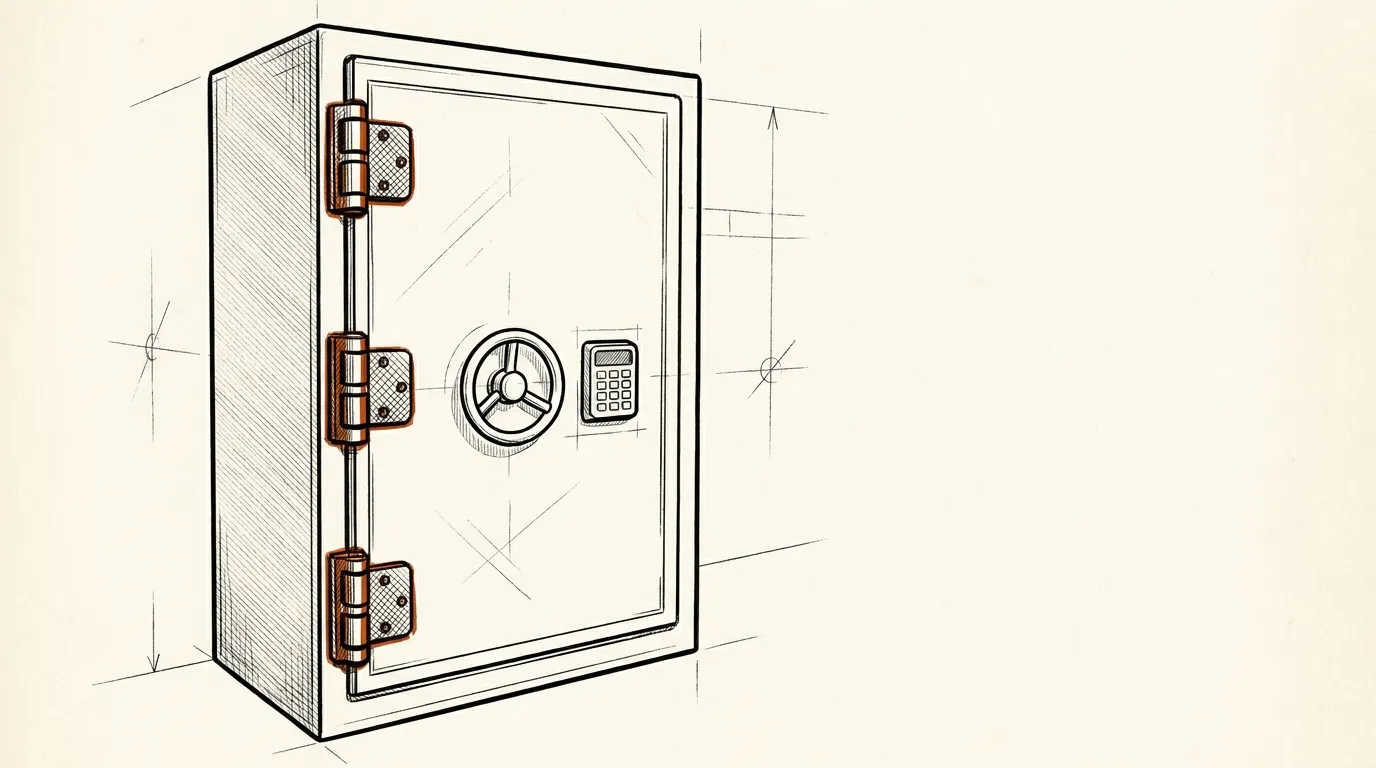
Short answer: Gun safe hinges hold the door up; they shouldn't be what holds it shut. On a well-designed safe, the hinge side is protected so the door stays in place even if the hinges are attacked — by bolts on the hinge side, a dead bar, or an interlocking door. California's gun safe standard requires exactly that: hinges protected to prevent removal of the door. Internal hinges hide the hinge; external hinges rely on that protection behind it. Both can be fine. Check what's behind the hinge, then check the steel.
This guide covers the hinge side of a gun safe — internal vs external hinges and what protects them — and then the two things people usually ask next: gun safe steel thickness and the door seal. If you're comparing safes, our gun safes page lays out the categories side by side.
Internal vs external gun safe hinges
There are two basic designs, and both are common on gun safes.
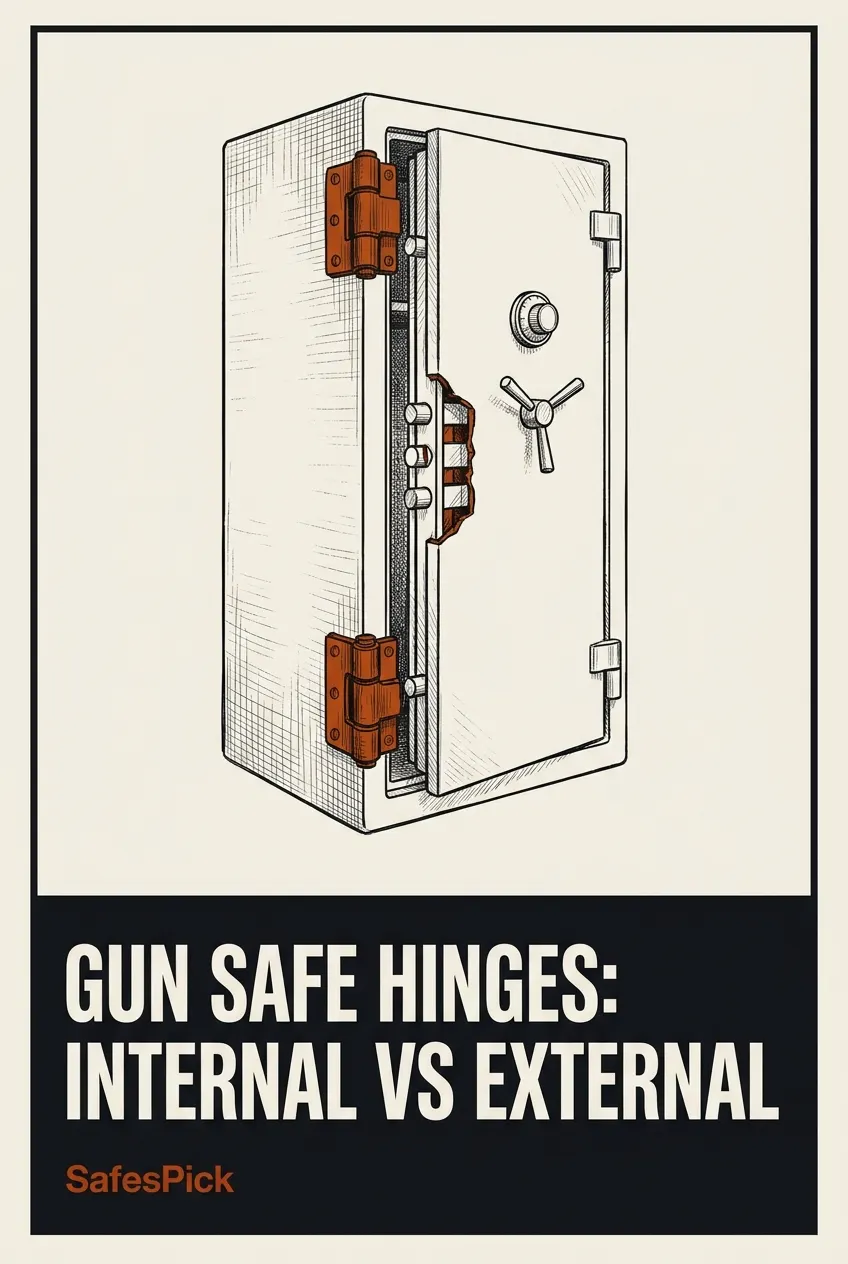
- Internal hinges sit inside the safe body and are hidden when the door is closed. Liberty Safe describes its internal hinges as ball-bearing hinges attached to the interior of the safe body, and says fully welded internal hinges prevent tampering, cutting or torching off the hinges.
- External hinges are mounted on the outside of the safe body. Liberty uses them on its National Security models and says those still use active bolts on all four sides of the door to prevent removal of the door, even if the hinges are tampered with.
Those are one manufacturer's descriptions of its own designs. The principle behind them is general, and it's the one to check on any safe: what keeps the door in the frame if the hinge is gone?
Picture Kevin, our hypothetical burglar, staring at a row of exposed hinges. He's in a hurry, and he has a pry bar. If the hinge side is protected, a bent hinge gets him a door that still doesn't move. The hinge was never the lock.
Where to look next
What protects the hinge side: the California standard
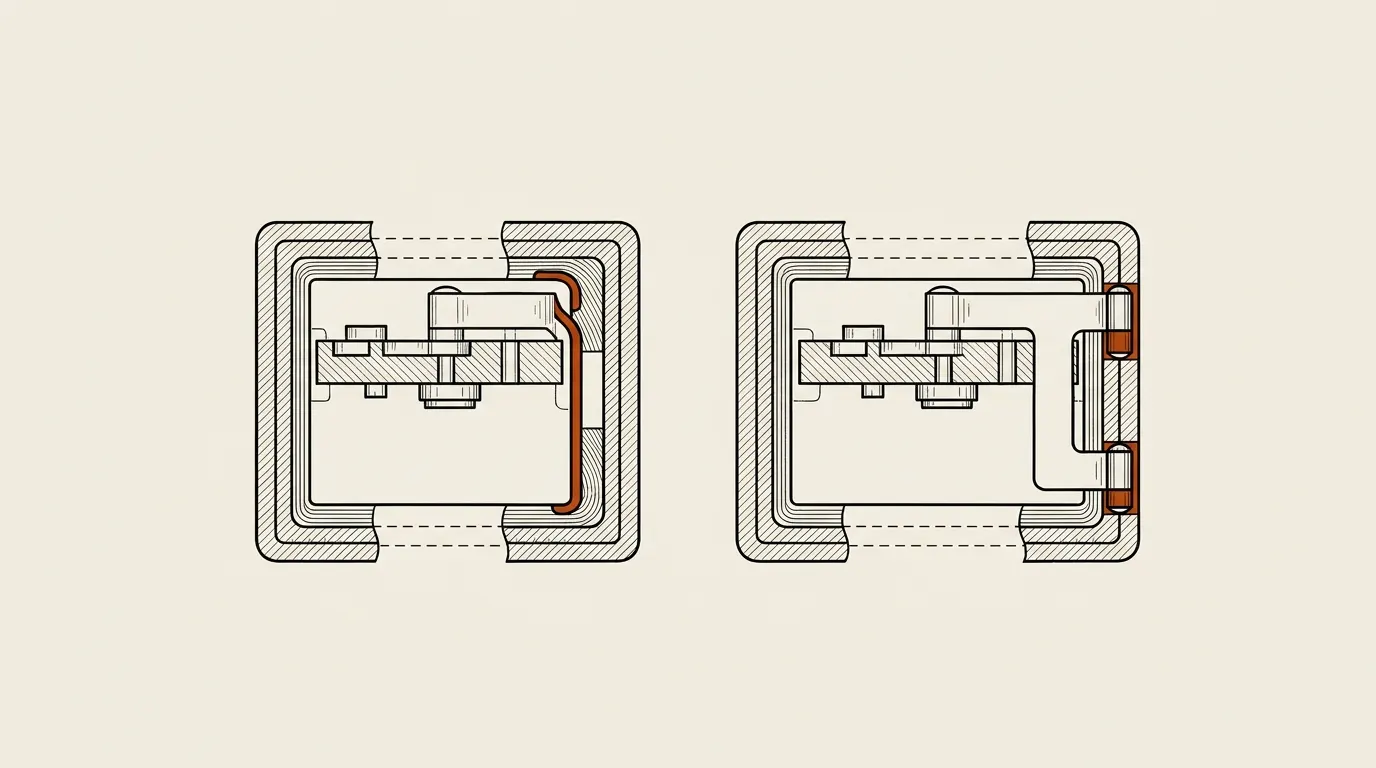
California's Department of Justice writes hinge protection into its gun safe standard. The wording is direct: door hinges shall be protected to prevent the removal of the door.
It also lists the protective features that qualify, including but not limited to:
- Hinges not exposed to the outside
- Interlocking door designs
- Dead bars
- Jeweler's lugs
- Active or inactive locking bolts
That list is useful even if you don't live in California. It's the checklist for any safe's hinge side. An external hinge with bolts or a dead bar behind it meets the idea. An external hinge with nothing behind it doesn't.
California also accepts, as an alternative, a safe certified or listed as meeting the UL Residential Security Container standard by a Nationally Recognized Testing Laboratory. That's a performance route: under UL 1037, a Level I RSC must resist a 5-minute attack by one operator with common hand tools and a small electric drill, without the door opening. The test doesn't care which side the attack starts on.
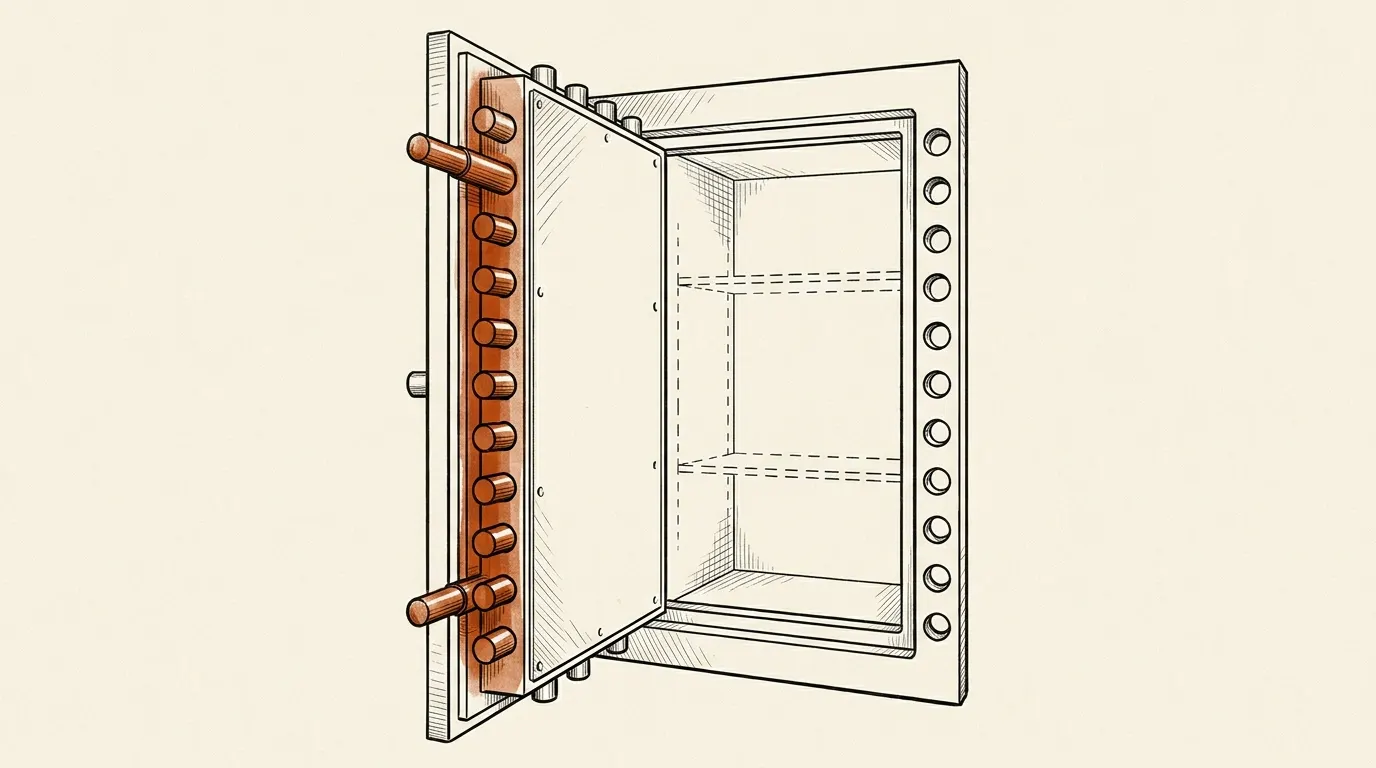
Gun safe steel gauge: lower number, thicker steel
Gauge numbers run backwards. The Marketing Department knows it, and is quietly delighted every time someone assumes 14 beats 10.
Under the U.S. Standard Gauge for sheet and plate steel in federal law (15 U.S.C. 206):
| Gauge | Thickness (in) |
|---|---|
| 7 | 0.1875 |
| 10 | 0.1406 |
| 11 | 0.125 |
| 12 | 0.1094 |
| 14 | 0.0781 |
| 16 | 0.0625 |
There's a wrinkle. That legal gauge is defined by weight per square foot, and steel mills today usually quote the Manufacturers' Standard Gauge, which industry charts commonly list as slightly thinner for the same number — about 0.1345 inch for 10 gauge and 0.1046 inch for 12 gauge. The safe maker's stated thickness in inches or millimeters is the most reliable figure, when they give it.
Liberty Safe, as an example of the range, says its safe bodies and doors are formed from 14, 12, 11, 10 or 7-gauge steel, depending on the model.
10 gauge vs 12 gauge steel: what the difference buys
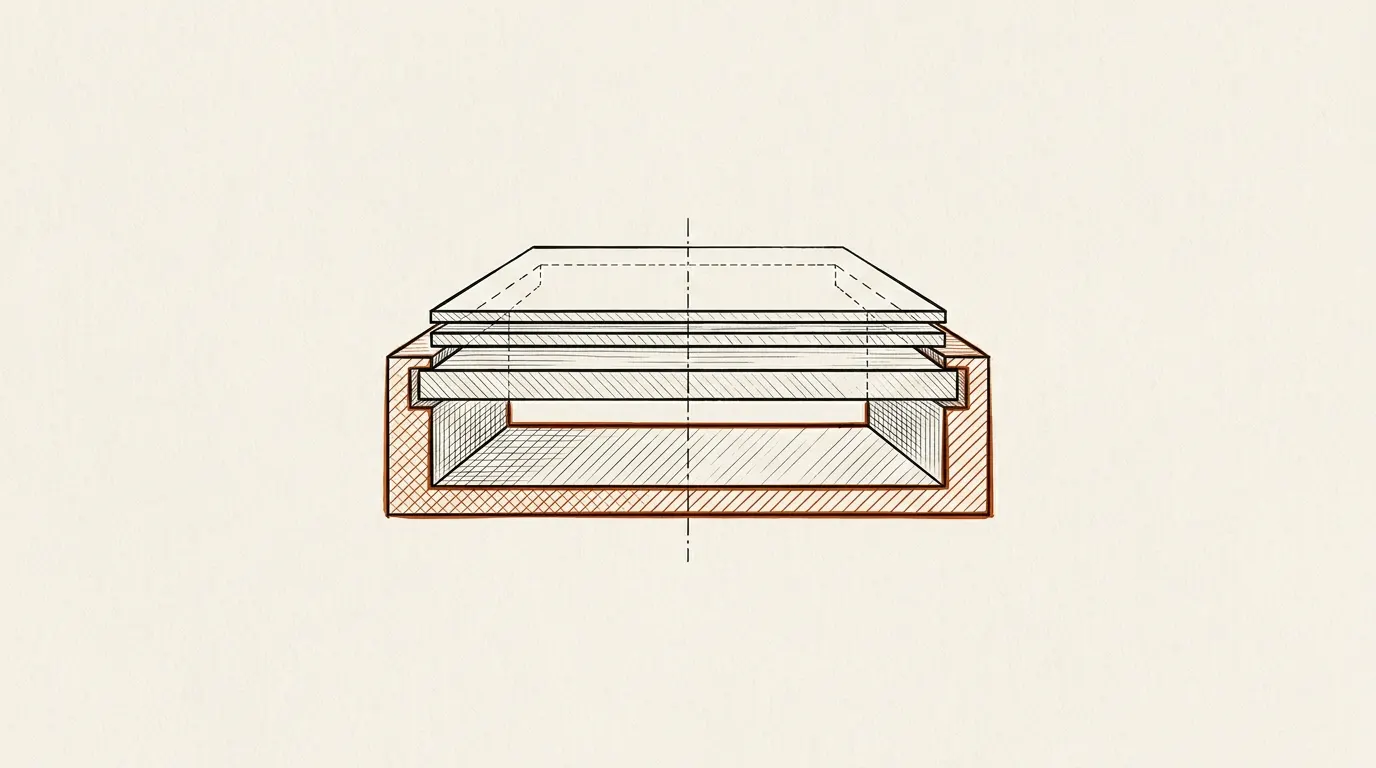
By the federal table, 10 gauge is 0.1406 inch and 12 gauge is 0.1094 inch. That makes 10 gauge a little under a third thicker, and heavier by the same proportion: 5.625 lb per square foot against 4.375.
Thicker body steel is harder to cut or pry. It's also one number among several. Door construction, the bolt system, hinge-side protection and the safe's rating all decide how the whole box performs. A thick body with a thin door is a good wall with a weak gate.
As a benchmark, California's DOJ standard requires exterior walls of at least 12-gauge steel for a single-walled safe (or two walls totaling at least 0.100 inch), and a door of at least one layer of 7-gauge steel plate or two layers of 12-gauge steel. That's a minimum for a state standard, not a recommendation for your house.
Gun safe steel thickness vs the rating
Steel thickness is a spec. A rating is a test. The UL RSC test doesn't specify a gauge; it specifies an attack and a failure, and the safe has to survive it however it's built. Higher RSC levels add two operators, more tools and smaller openings as failure, and require a safe of 750 lb or more, or one that can be anchored.
So when a listing gives you gauge, take it as useful construction information. When it gives you a rating from a named lab, that's what tells you how the construction performed.
Gun safe door seal: what it's for
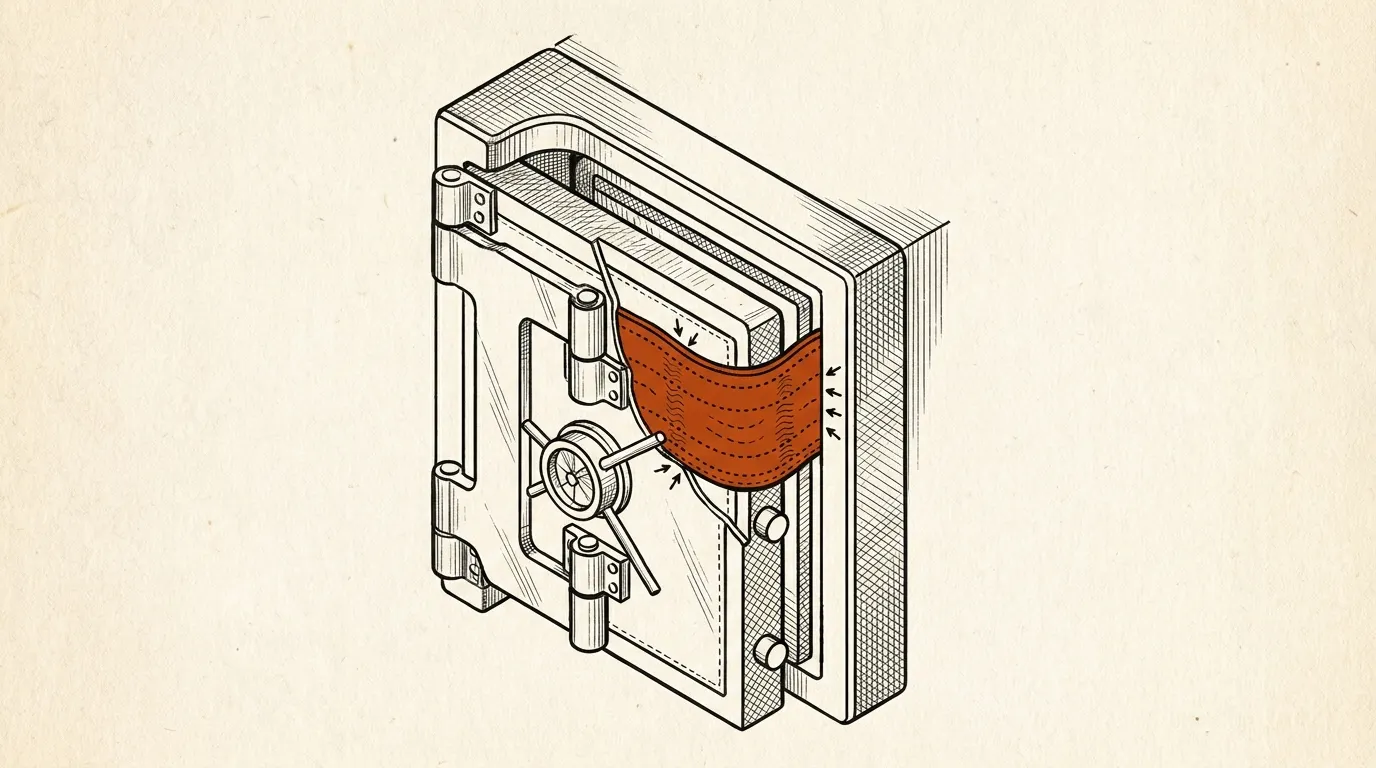
The seal around a gun safe door is usually a fire feature, not a security one. Many fire-rated door systems use an intumescent seal that expands when heated.
Liberty Safe says its Palusol seal expands to several times its original size when exposed to intense heat and tightly seals gaps around the door against smoke, heat and water. Its gasket-care article adds practical advice:
- Inspect the seal and the door's mating surface for splits, brittleness, corner gaps and debris
- Clean with a soft, slightly damp cloth, and mild soap and water for stubborn grime
- Avoid bleach- or ammonia-heavy cleaners, which Liberty says can shorten gasket life
- Replace a torn seal only after confirming the correct part with the manufacturer
The seal is the quietest part of the door. It does nothing until the worst day, then does all of it at once.
For how fire ratings work, see are gun safes fireproof.
How to remove a gun safe door: ask first
People search for this when moving a safe, because the door is a large share of its weight. Whether a door comes off, and how, depends on the model and its hinge design — and the hinge-side protections described above exist precisely so that doors don't come off easily.
I didn't find a manufacturer page giving a general door-removal procedure, and I won't invent one. Start with the owner's manual. If it doesn't cover door removal, ask the manufacturer before you touch the hinges, since work on the door can affect the warranty and the door's fit. For a move, a professional safe mover may be the simpler answer. Our guide on how to move a gun safe covers the rest.
Here's the catch: the hinge side is rarely where the trouble is
Hinge worries are visual. You can see the hinges, so they look like the weak point. The California standard and the UL test both point somewhere else: what matters is whether the door can be removed or opened, not what the hinge looks like.
The real questions for the hinge side are short. Is there anything behind the hinge — bolts, a dead bar, an interlocking door? Does the manufacturer say so in writing? Does the safe carry a rating that tested the whole container? If those answers are yes, an external hinge is a design choice, not a flaw.
Skip it if: when hinges shouldn't decide your purchase
- The safe has a named RSC or NRTL rating. The test already covered the door, hinges included.
- You're choosing between two hinge styles on otherwise equal safes. Pick on rating, steel, door construction and fit for your space instead.
- You're buying a small handgun safe. Hinge design matters less than the lock and the backup; see handgun safes.
- The safe isn't anchored. A protected hinge can't stop a safe from leaving whole.
So, the hinge side: look behind it, not at it. Open the door of the safe you're considering, find the bolts or bar on the hinge side, and check the manual says what they are. Then check the gauge in inches, not in marketing — and bolt it down.
Save this guide for later
Questions people ask about gun safe hinges
Are external hinges on a gun safe a weakness?
Not by themselves, if the hinge side is protected so that the door cannot be removed when the hinges are attacked. California's gun safe standard requires hinges to be protected to prevent removal of the door, and lists features such as hinges not exposed to the outside, interlocking door designs, dead bars, jeweler's lugs and locking bolts.
Is 10 gauge steel better than 12 gauge for a gun safe?
10 gauge is thicker than 12 gauge, because lower gauge numbers mean thicker steel. Under the U.S. Standard Gauge in federal law, 10 gauge is 0.1406 inch and 12 gauge is 0.1094 inch. Body thickness is one factor; door construction, bolts and the safe's rating also matter.
What steel thickness should a gun safe have?
There is no single federal minimum. California's DOJ gun safe standard, as one benchmark, requires exterior walls of at least 12-gauge steel for a single-walled safe and a door of at least 7-gauge steel plate or two layers of 12-gauge steel.
How do you remove a gun safe door?
It depends on the model, and many doors are designed not to come off easily. Check the owner's manual or ask the manufacturer before attempting it, and consider a professional safe mover, since safe doors are heavy.
What does the door seal on a gun safe do?
On many fire-rated safes, the door seal is an intumescent material that expands when heated to close gaps around the door. Liberty Safe says its Palusol seal expands to several times its original size when exposed to intense heat.
Sources
- Gun Safe Standards | California DOJ, Office of the Attorney General — accessed 2026-10-12
- What Are Liberty Safes Made Of? Materials and Features | Liberty Safe — accessed 2026-10-12
- 15 U.S. Code 206 - Standard gauge for sheet and plate iron and steel (Cornell LII) — accessed 2026-10-12
- Sheet Metal Gauge Chart (CableOrganizer) — accessed 2026-10-12
- Fire Protection: A Primary Reason to Own a Good Safe | Liberty Safe — accessed 2026-10-12
- Safe Door Gasket Care: Keeping Your Safe Fire- and Water-Tight | Liberty Safe — accessed 2026-10-12
- Intertek requirement-change notice: UL 1037 revision 9-9-2016, Section 54 Residential Security Containers — accessed 2026-10-12