Home Safes, Read Closely: Gun, Fire and Document Safes Compared
Every home safe on Amazon comes with a photo of gold bars. Nobody keeps gold bars in a closet safe. They keep passports, a hard drive, a handgun and the deed to the house. SafesPick lays out what each safe's maker and lab will put in writing — fire rating, burglary rating, steel, lock, size — so you can compare the paperwork instead of the photo.
A home safe is three different products wearing one name
A home safe is any lockable container meant to protect things inside a house. That covers a lot: a tall gun safe in the garage, a fire-rated document box in a closet, a handgun safe on a nightstand, a wall safe behind a picture. They share a door and a lock. Almost everything else is different.
What a household safe protects against falls into three jobs:
- Fire. A fire-rated safe keeps its interior below a set temperature for a set time. UL describes its rating as a class — the maximum interior temperature during testing, such as Class 350 — plus a time. Class 350 is intended for paper records.
- Theft. A burglary rating describes a defined attack. For gun safes, UL 1037 Residential Security Container (RSC) Level I means the safe resisted a 5-minute attack by one person with common hand tools and a small electric drill. Higher-security safes are rated under UL 687 classes such as TL-15 and TL-30.
- Access. Keeping children, guests or anyone else out of something — firearms, medication, cash. Here the lock and its backup matter most.
Most home safes are built around one of these jobs. Some cover two. A fire rating says nothing about burglary, and a burglary rating says nothing about fire. A listing that names one rating and implies the other is doing the Marketing Department's work for it.
Both risks are real. The NFPA estimates US fire departments responded to about 329,500 home structure fires in 2024. The FBI estimates 661,800 burglaries in 2025, with residential properties making up 53.4% of them.
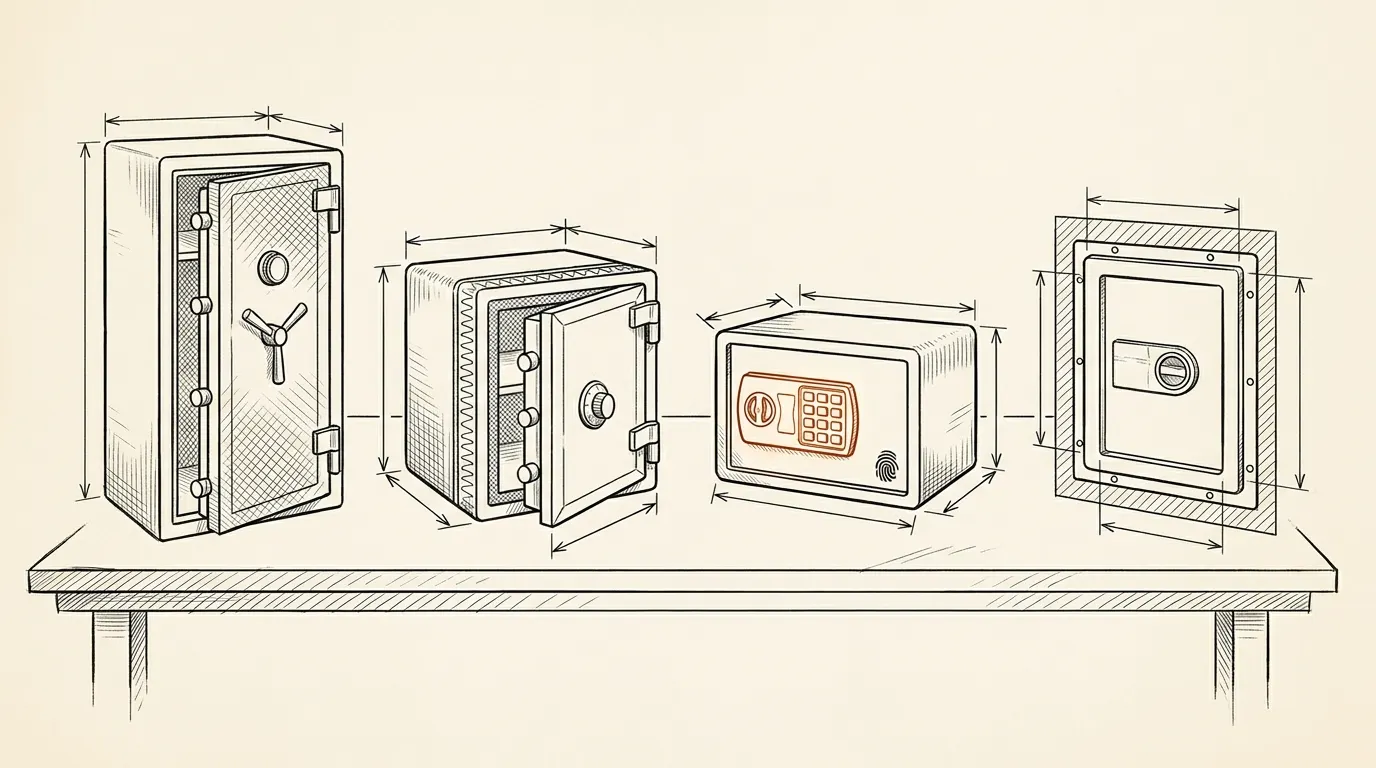
Rated vs. claimed: how we lay out every residential safe
SafesPick is a reference site. We don't test safes, and we don't run a lab. We read what manufacturers, labs and Amazon listings put in writing, and we lay it out in tables you can sort and filter.
Every fire and burglary value in our tables carries a label:
- Rated — an independent lab is named, such as UL or Intertek (ETL)
- Claimed — the manufacturer states it and no lab is named
- — — nobody we found put it in writing
That's the whole method. It's why you won't find a "best home safe" verdict here that isn't tied to a stated rule, and why our home safe reviews are readings of the paperwork, not scores from our own testing. What you will find is a safe comparison by type, with each spec traced to a source. Our about page explains how the data is collected.
What "the best home safe" looks like on paper
There's no single best safe for home use, because there's no single job. But the strongest listings in any category share a pattern, and you can check for it in a minute:
- Every rating names a lab, or says plainly that the manufacturer tested it
- Interior dimensions are given, not just exterior size and cubic feet
- The steel is stated as a gauge or in inches; lower gauge means thicker steel
- The lock is named, with its backup and where the battery lives
- Anchor holes and a bolt kit are part of the package
- The manual is available before you buy, so you can read it
A high quality home safe isn't defined by price tier. A budget safe that states all of this is easier to judge than a premium one that states half of it. Our tables mark the gaps with "—", so the missing parts are as visible as the stated ones.
Types of safes, by what they actually protect
20 type pagesGun Safe
Every gun safe we track, regardless of size or lock type.
Open the file →02 · /fireproof-safes/Fireproof Safe
Safes sold as fire-rated. The fire rating column shows minutes, temperature and who certified it.
Open the file →03 · /lock-boxes/Lock Box
Small portable lock boxes for valuables and documents. Key-only lockboxes for doors are not included.
Open the file →04 · /safe-boxes/Safe Box
Compact home safe boxes for cash, documents and small valuables.
Open the file →05 · /small-safes/Small Safe
Home, fire and document safes with an interior of 1.2 cu ft or less.
Open the file →06 · /wall-safes/Wall Safe
Safes that mount inside a wall between studs.
Open the file →07 · /money-safes/Money Safe
Home safes, floor safes and lock boxes suitable for cash.
Open the file →How to choose a home safe in 5 points
Most buying mistakes come from choosing the safe before deciding what it's for. Twenty-four guns, the box says, and a fire rating in large type. Neither number tells you whether your passport and your rifle will both be fine. Work through these five in order.
- Decide the job: fire, theft, access, or a mix. Papers and drives need a fire rating that matches them. Firearms need a lock and, ideally, a burglary rating. Cash and jewelry need the safe to stay put. The safe types above are grouped by job.
- Measure the inside, not the outside. Lay out what's going in. Documents lying flat set the minimum width and depth. Long guns set the height. Fire lining and door panels take more room than you'd expect, so buy bigger than the box says.
- Read every rating as three parts. Fire: time, temperature or class, and the lab. Water: depth, hours and the lab. Burglary: the standard and the level. Our UL safe ratings guide decodes each label. A rating with a missing part is a claim.
- Pick a lock you'll use correctly every day, and check the backup. Mechanical dials need no batteries; UL 768 rates them for resistance to manipulation. Keypads are faster and need a battery you can reach and a backup key or code. Fingerprint locks are fastest and have had several CPSC recalls since 2023 — check any model against the CPSC recall list.
- Plan where it goes and bolt it down. A safe that isn't anchored can be carried off and opened elsewhere. Check the floor can take the weight, look for pre-drilled anchor holes, and read our bolting guide before delivery day.
Budget safes, cheap safes for home and affordable home safes all appear in our tables, labeled by price tier rather than price. For the money, an anchor kit and a stated rating do more than an extra inch of door or a longer bolt count.
Home safe vs safe deposit box, and other questions before you buy
A safe deposit box and a home safe aren't rivals. A bank box is off-site and suits things you rarely need: original deeds, bonds, a spare copy of a will. A safe for home use keeps things you need now within reach: passports, firearms, a backup drive. Neither is insured as a deposit; the FDIC lists safe deposit boxes and their contents as not covered.
Wall safes are small safes that fit between wall studs. They're concealed and easy to reach. They're limited by stud depth and by the wall they sit in, so they suit cash and jewelry rather than heavy items. Our wall safes page covers the types.
Bedroom safes sit in the most obvious room in the house, which is the trouble with them. Our where to put a gun safe guide covers better rooms for safes of any kind, and hidden safe ideas covers concealment.
How safe locks work, briefly. A mechanical combination lock aligns a set of wheels under the dial; an electronic lock checks a code or fingerprint and usually drives a small solenoid or motor. Either one then frees the bolt mechanism, which you move with a handle. The lock is often a separate component with its own rating.
Getting rid of an old safe. Remove the contents and take the door off or leave it secured open so no one can be trapped inside. A safe is mostly steel, so a scrap-metal recycler or your city's bulk-pickup service is the place to ask.
Brands that make home safes
Every brand we track has a page or a short card listing what it makes, where its facts come from, and which of its safes are on Amazon US. Brand pages separate rated specs from claimed ones, the same way the type tables do. The full list is in our brands catalog.
Safe brands we track
All 83 brands →Guides for reading the fine print
Guides cover the questions that come before and after a purchase: how ratings work, how to move and anchor a safe, and how to get back in when the code is gone.
Guides
- How To Change Sentry Safe CodeHow to change a Sentry safe code: factory codes, user codes, the reset button on pistol and security safes, and why dial combinations can't be changed.
- How To Change Battery In Sentry SafeHow to change the battery in a Sentry safe: where the battery lives on each model, which batteries SentrySafe specifies, and how to open it with a dead battery.
- How To Open A Safe Without A CodeHow to open a digital safe without the code: factory codes, override keys, dead-battery steps from the manuals, and who to call when the code is truly gone.
- How To Open A Combination SafeHow to open a combination safe with a 3-number dial: the turn-by-turn steps from Sargent & Greenleaf and SentrySafe manuals, and what to do when the dial won't open.
- How To Open Sentry Safe With KeyHow to open a Sentry safe with a key: override keys, dual-key locks that also need the code, key-only chests, and what to do when the key won't turn.
- How To Open Sentry Safe Without KeyHow to open a Sentry safe without a key: when the code is enough, how to order a replacement key from SentrySafe, and when to call a licensed locksmith.
- How To Open A Sentry Combination SafeHow to open a Sentry combination safe: SentrySafe's dial steps, where the combination is printed, why the handle sticks, and how to lock the dial again.
- Gun Safe KeyLost your gun safe key? How to find the key number, prove ownership and order a replacement from Liberty, Winchester, Stack-On, Cannon, Barska and others.
- Sentry Safe Lost CombinationSentry safe lost combination? Where the combination is printed, how SentrySafe's replacement service works, what it asks for, and when to call a locksmith.
- Hidden Safe IdeasHidden safe ideas for home: where to hide a safe, wall and floor safes, diversion safes and whether they work, and why hiding is not safe storage for a gun.
- Gun Safe TestWhat a gun safe test actually involves: UL RSC burglary tests, UL 72 fire tests, ETL verification and in-house fire tests, and how to read each claim.
- Liberty Safe Battery ChangeLiberty safe battery change, step by step for SecuRam and Sargent & Greenleaf keypads: which battery to buy, low-battery signals, and what a dead battery means.
Decide the job, measure what's going in, and read every rating as three parts. Then check the price, bolt it down, and keep the code somewhere other than the safe.
Questions people ask about home safes
How much does a home safe cost?
It depends on size, fire rating, burglary rating, steel thickness and lock type. We don't publish prices because they change constantly; each product in our tables has a Check price button that shows the current Amazon price, and the tables show price tier.
Is a home safe better than a safe deposit box?
They do different jobs. A safe deposit box is off-site and suits things you rarely need; a home safe keeps items within reach. Neither is a bank deposit: the FDIC lists safe deposit boxes and their contents as not covered by deposit insurance. You can use both.
What should I keep in a home safe?
Documents that are hard to replace, such as passports, birth certificates, titles and wills; small valuables; spare cash; backup drives; and firearms in a safe built for them. Match the safe's fire rating to the contents: UL 72 Class 350 is intended for paper, and lower classes for non-paper records.
Where should I put a safe in my house?
Somewhere you can bolt it to the floor, out of plain sight, and where the floor can carry its weight. Avoid places prone to water unless the safe has a water rating. Our guide on where to put a gun safe covers garages, basements and upper floors.
Can a home safe be stolen?
Yes, if it can be carried. A safe that isn't anchored can be removed whole and opened elsewhere. Bolting it to the floor, as manufacturers' manuals describe, is the simplest way to prevent that.
How do I open a safe if I forget the code?
Use the backup the manufacturer provides: an override key, a reset procedure or customer support with proof of ownership. Our guides on opening a digital safe without the code and opening a combination safe cover the common cases.
Sources
- Turning Up the Heat: A Sneak Peek into UL's Fire Testing of Safes (UL) — accessed 2026-10-12
- UL 72 Tests for Fire Resistance of Record Protection Equipment (UL Standards & Engagement) — accessed 2026-10-12
- UL 1037 Antitheft Alarms and Devices (UL Standards & Engagement) — accessed 2026-10-12
- Intertek requirement-change notice: UL 1037 revision 9-9-2016, Section 54 Residential Security Containers — accessed 2026-10-12
- UL 687 Burglary-Resistant Safes (UL Standards & Engagement) — accessed 2026-10-12
- UL 768 Combination Locks (UL Standards & Engagement) — accessed 2026-10-12
- Locks and Access Control Equipment Testing (Intertek) — accessed 2026-10-12
- 15 U.S. Code sec. 206 - Standard gauge for sheet and plate iron and steel (Cornell LII) — accessed 2026-10-12
- Fire Loss in the United States During 2024 (NFPA, November 2025) — accessed 2026-10-12
- Reported Crimes in the Nation, 2025 - Quick Stats (FBI UCR Program) — accessed 2026-10-12
- Understanding Deposit Insurance (FDIC) — accessed 2026-10-12
- Recalls (U.S. Consumer Product Safety Commission) — accessed 2026-10-12