Gun Safes: What the Ratings, Steel and Locks Actually Tell You
A gun safe is a steel container built to hold long guns and keep them away from anyone who isn't you. Most gun safe listings lead with a gun count, a fire time and a picture of the bolts. The three things that matter more are quieter: who rated it, how thick the steel is, and what's behind the lock.
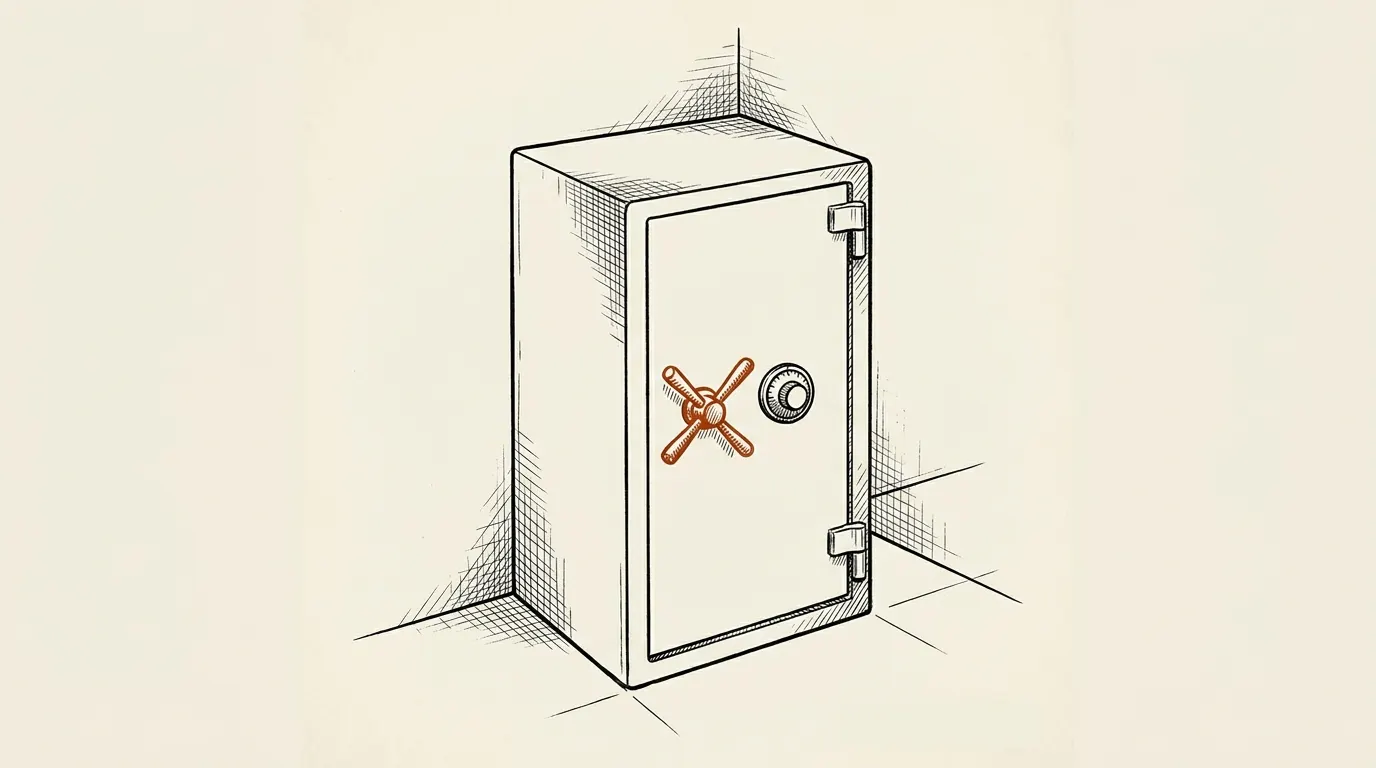
A gun safe is a steel box for long guns, rated or not
A gun safe is a tall steel container with a locking door, shaped to stand rifles and shotguns upright. That covers a lot of ground. A rifle safe, a shotgun safe and a home gun safe are mostly the same product under different search terms. A metal gun safe sold as a "gun safe vault" is still a gun safe; the extra word adds no rating.
What separates one gun safe from another is not the name. It's four things you can check on paper:
- A burglary rating — usually UL 1037 Residential Security Container (RSC), or none
- A fire rating — minutes, temperature and who tested it, or none
- The steel — body gauge and door construction
- The lock — dial, keypad or fingerprint, and the backup that comes with it
Some gun safes carry all four in writing. Some carry a gun count and a photo. The table on this page shows which is which, with "—" where nobody put a value in writing.
There are a few shapes inside the category. Full-height safes stand in a closet or garage. Slimline and vertical gun safes are narrow units for tight spaces. A floor gun safe or in floor gun safe sits in or under the floor; check its interior length before planning on rifles. A gun and document safe adds a shelf or door panel for papers. A modern gun safe may hide some of this behind a flat door and a touchscreen. The ratings question is the same for all of them.
Who a home gun safe is for, and who should skip it
A home gun safe fits anyone who keeps more than one long gun at home and wants them locked, in one place, behind steel. It's also the default answer for safe gun storage when a household includes people who shouldn't have access.
You may not need one if:
- You own one handgun and want fast access. A handgun safe is built for that job and is far smaller.
- You want controlled access, not burglary resistance. A gun cabinet or locker is lighter steel, usually with no fire rating, and may be enough to keep guns locked away from household members. Our gun safe vs gun cabinet guide covers the difference.
- You can't anchor anything. A gun safe that isn't bolted to the floor gives up much of its burglary resistance. If you rent, read the bolting guide and ask your landlord before you buy.
Gun safe vs regular safe: different shapes, different ratings
A regular home safe is usually a cube built around documents and valuables. Its main selling point is often a fire rating. A gun safe is tall, built around long guns, and its main burglary rating — when there is one — is UL 1037 RSC.
The overlap is real. Many gun safes have a fire rating, and some home safes carry a burglary rating. The point is that neither word on the box tells you which. A UL RSC label is a burglary rating only; it says nothing about fire, which UL rates separately under UL 72. Read both lines, or note that one is missing.
What to look for in a gun safe: rating first, gun count last
The gun count on the door is the least useful number on the listing. It assumes thin, unscoped long guns packed shoulder to shoulder. Twenty-four guns, the box said. Twenty-four guns, if nobody in the house owns a scope. Here is the order I read a listing in.
1. Burglary rating. UL 1037 covers Residential Security Containers at Levels I, II and III. A Level I RSC must resist a 5-minute attack by one person using common hand tools and a small electric drill, without the door opening or a 4-inch hand-hole being made. Levels II and III use two operators, 10 minutes and more aggressive tools. Our UL safe ratings guide goes through each level. Intertek, which issues ETL marks, is also an OSHA-recognized lab that can test to these standards.
2. Fire rating, as a triple. Time, temperature and who tested it. UL describes its own fire rating as a class (the maximum interior temperature during testing, such as Class 350) plus a time. Class 350 is intended to protect paper records. A gun safe listing that gives only an outside temperature and "tested in-house" is a claim, not a rating. The guide are gun safes fireproof explains what each part means.
3. Steel gauge. Lower gauge numbers mean thicker steel. Under the federal U.S. Standard Gauge, 12 gauge is 0.1094 in and 14 gauge is 0.0781 in. If thickness is a priority, our heavy-duty gun safe page lists only 12-gauge bodies and thicker.
4. The door and the pry side. Bolt count is a marketing number. Door construction, hinge protection and the gap between door and frame matter more. California's standard, for comparison, asks for at least three 1/2-inch steel locking bolts and protected hinges, not a bolt count.
5. The lock and the backup. Dial, keypad or fingerprint. Each needs a backup you can actually use: a key, an override code, or a battery you can change without opening the safe. Read the manual for where the battery lives.
6. Interior dimensions. Height, width and depth inside the door, after the door panel and shelves. Our gun safe dimensions guide shows how to turn those into a real capacity. Buy bigger than the box says.
7. Anchor holes. Pre-drilled holes in the floor of the safe and a bolt-down kit in the box. A gun safe that isn't anchored can be tipped or moved.
California is the one state with a published construction standard for gun safes. Its DOJ accepts either a safe that meets specific construction rules (12-gauge walls, a 7-gauge or double 12-gauge door, a drill-resistant lock with at least 10,000 combinations) or one listed as meeting the UL RSC standard by a Nationally Recognized Testing Laboratory. It's useful as a yardstick even outside California.
Questions the listing doesn't answer: EMP, water, bullets, rust
Gun safe features sometimes include claims the standards don't cover. None of the gun safe standards we've verified — UL 1037 RSC, UL 72 and the California DOJ rules — tests for ballistic resistance, water submersion or electromagnetic shielding. If a listing claims any of these, look for who tested it and how. If nobody is named, treat it as a claim.
Rust and humidity are a storage question rather than a rating. A closed steel box holds whatever moisture is in the room. Our gun safe humidity guide covers dehumidifiers and target levels. Battery life for keypad locks is in the manual, and it varies by lock.
Gun storage laws and children: the plain part
Storage law is set mostly by states, and the rules differ. A December 2023 Department of Justice review describes three broad types of state law: secure storage required when a minor could gain access, when a prohibited person is present, or whenever a firearm is unattended. We don't summarize individual state laws, and nothing here is legal advice. For your state, go to its official government site. As one example, the California DOJ publishes its gun safe standards.
If children live in or visit the home, the safe should stay locked whenever the guns are not in your hands. The DOJ's Safe Storage Fact Sheet says keeping firearms locked, unloaded and stored away from ammunition can significantly reduce the risk that children and teens use them to hurt themselves or others. Keep keys and codes where a child cannot find them. A safe reduces access only when it is closed and locked.
Compare models
In this tableEvery gun safe we track, regardless of size or lock type. Values we could not confirm show as "—".
We earn a commission if you buy through our links, at no cost to you. Disclosure
No live products match this page yet. The table fills in automatically when listings that fit the rule are available on Amazon US.
How to read the gun safe table
Every gun safe we track is in the table, sorted by advertised gun capacity, largest first. That sort is a starting point, not a recommendation. Use the filters to narrow it down.
- Start with the fire and burglary columns. A value marked "rated" names an independent lab. "Claimed" means the manufacturer says so and no lab is named. "—" means nobody we found put it in writing.
- Then check gauge. Remember it runs backwards: a 10 in that column is thicker steel than a 14.
- Then interior size. Compare interior dimensions against your longest gun, scope included.
- Then the lock. Pick the lock type you'll use correctly every day, and confirm the backup.
Two gun safes with the same gun count can be very different products. One may have a UL RSC label, a named fire lab and 12-gauge walls. Another may have none of the three. The table puts them side by side so the difference is visible. If you need a subset, our fire-rated gun safes page shows only gun safes with a stated fire rating.
Where to buy a gun safe is partly a logistics question. Large safes ship by freight, and delivery terms vary by seller. Check whether delivery is curbside or inside the house before you order, and see our moving a gun safe guide if you'll handle the last few feet yourself.
Measure the space and your longest gun. Filter the table for a rating that names a lab. Then bolt it down, and keep the code somewhere other than the door.
Related pages
Related guides
- Gun Safe KeyLost your gun safe key? How to find the key number, prove ownership and order a replacement from Liberty, Winchester, Stack-On, Cannon, Barska and others.
- Gun Safe TestWhat a gun safe test actually involves: UL RSC burglary tests, UL 72 fire tests, ETL verification and in-house fire tests, and how to read each claim.
- Gun Safe Humidity ControlGun safe humidity control explained: how dehumidifier rods and silica gel desiccants work, how to recharge them, and how to keep a gun safe dry.
Questions people ask about gun safes
How much does a gun safe cost?
It depends on size, steel thickness, lock type and whether the safe carries an independent fire or burglary rating. We don't publish prices because they change daily; each row in the table has a Check price button that shows the current Amazon price.
What should I look for when buying a gun safe?
Start with interior dimensions, not the advertised gun count. Then check for a UL Residential Security Container (RSC) burglary rating, a fire rating that names the time, temperature and lab, the steel gauge of the body, the lock type and its backup, and pre-drilled anchor holes.
What is the difference between a gun safe and a regular home safe?
A gun safe is tall and shaped for long guns, and its burglary rating, if it has one, is usually UL 1037 RSC. A home safe is usually smaller and often built around a fire rating for documents. Neither name guarantees a rating, so read the label on the specific product.
Are gun safe storage laws the same in every state?
No. Storage requirements are set mostly by states and differ from one to another. Check your state's official government site or ask the state agency. Nothing on this page is legal advice.
Can a gun safe go upstairs or in a garage?
Often yes, but it depends on the floor and the room. Upstairs, the weight of a loaded safe matters to the floor structure. In a garage, humidity, temperature swings and visibility are the usual concerns. Our guide on where to put a gun safe covers both.
Is a gun safe waterproof or bulletproof?
Not by default. A water rating is a separate claim and should state depth, time and who tested it. None of the standards we have verified for gun safes, including UL 1037 RSC, UL 72 and the California DOJ standard, includes a ballistic test.
Sources
- UL 1037 Antitheft Alarms and Devices (UL Standards & Engagement) — accessed 2026-10-12
- Intertek requirement-change notice: UL 1037 revision 9-9-2016, Section 54 Residential Security Containers — accessed 2026-10-12
- Anti-theft Device Testing and Certification (UL Solutions) — accessed 2026-10-12
- Turning Up the Heat: A Sneak Peek into UL's Fire Testing of Safes (UL) — accessed 2026-10-12
- UL 72 Tests for Fire Resistance of Record Protection Equipment (UL Standards & Engagement) — accessed 2026-10-12
- 15 U.S. Code sec. 206 - Standard gauge for sheet and plate iron and steel (Cornell LII) — accessed 2026-10-12
- Gun Safe Standards (California DOJ, Office of the Attorney General) — accessed 2026-10-12
- Locks and Access Control Equipment Testing (Intertek) — accessed 2026-10-12
- Safe Storage Fact Sheet (U.S. Department of Justice) — accessed 2026-10-12
- Commentary for Safe Storage Model Legislation (U.S. Department of Justice, Dec 13, 2023) — accessed 2026-10-12