Bolt Safe to Floor: How to Anchor a Safe to Concrete or Wood
Most safes ship with four holes in the floor and a small bag of hardware, and most of those bags are still in the closet, unopened, next to the safe. The holes are the cheapest security feature a safe has. They were drilled at the factory. All you have to do is finish the job.
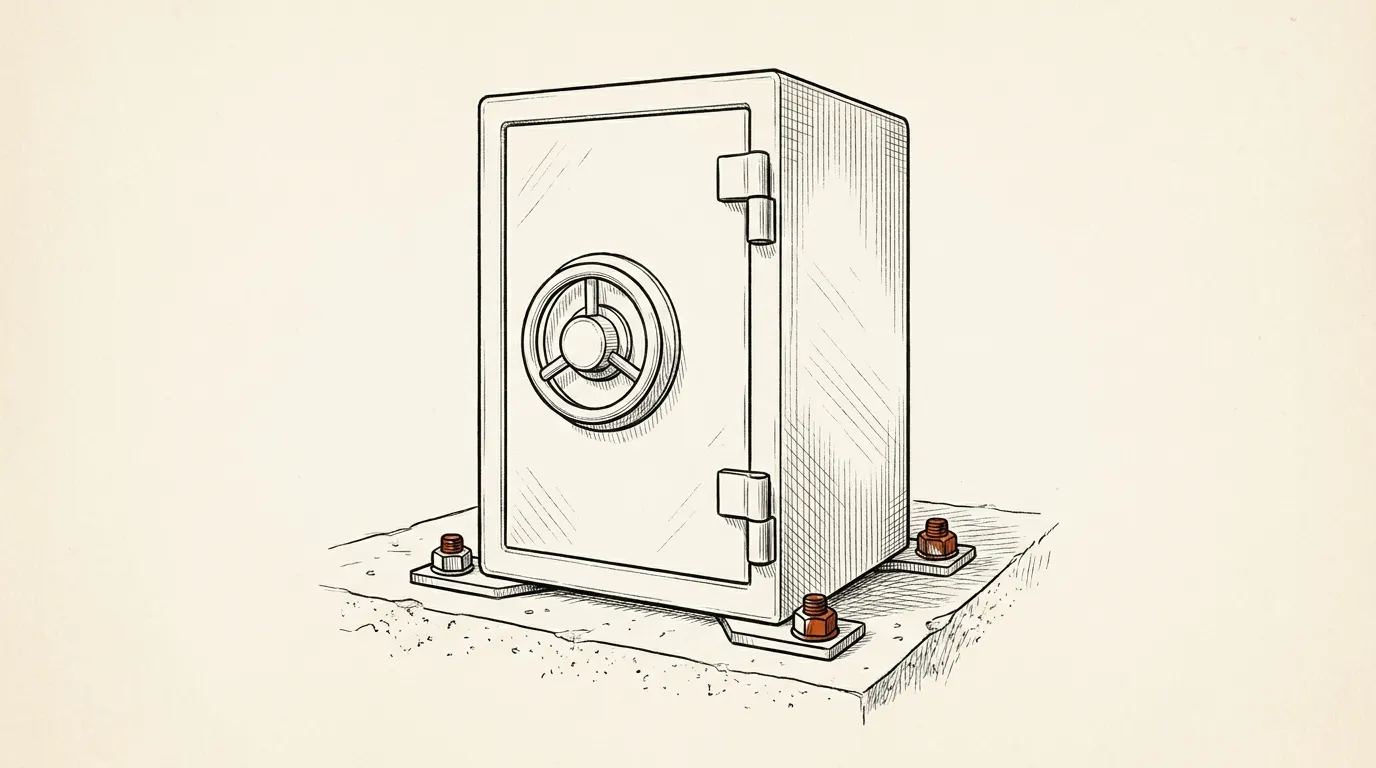
Short answer: To bolt a safe to the floor, use the factory anchor holes in the safe's floor and the hardware for your floor type: concrete anchors in a hammer-drilled hole for a slab, lag bolts into the wood for a wood subfloor, ideally into a joist. Mark through the holes, move the safe, drill, clean the holes, put the safe back and fasten through the floor. Every manufacturer we read recommends it. The exceptions are post-tension slabs, which shouldn't be drilled, and tile, which can crack.
This guide is about anchoring: concrete, wood, carpet, tile, garage slabs and walls. For the rest of the setup — placement, leveling, power — see our gun safe installation guide. If you're still picking a safe, the gun safes page shows which models list factory anchor holes.
Should you bolt a safe to the floor? The manufacturers agree
The manufacturers don't hedge on this one.
- Liberty Safe: "We always recommend that you bolt down your safe for security and safety reasons."
- Fort Knox: "All Fort Knox safes include anchor bolt holes for securing to the floor," and "anchoring is always recommended for maximum security."
- Browning: placing a safe on concrete and anchoring it "provides the maximum protection for your valuables," because "many common attacks on security safes involve tipping the safe over on its back."
- Cannon Safe: anchoring "can help prevent tipping and make unauthorized removal more difficult."
There are two reasons in those quotes. Security is the obvious one. The other is safety: a tall safe with a heavy door can tip forward when the door swings open, as Browning's and Liberty's manuals both warn.
The opinion I hold most firmly about safes: a safe you haven't anchored is mostly a heavy box waiting for a strong friend. Four holes fix that.
Does a safe have to be bolted to the floor? When it's required
Usually it's recommended, not required. Two exceptions are worth knowing.
Some water ratings depend on it. SentrySafe's Executive safe manual says: "To provide water-resistance this safe must be bolted down. (hardware supplied)" SentrySafe's bolt-down kit page says FPW models keep their water protection once bolted with the kit, while an FP082C has no water protection either way.
Some fire and water ratings depend on doing it right. Stack-On's GSXW-836 manual says to drill out the fire-resistant caulking in the mounting holes and mount with the supplied lag bolts and gasket washers. "Failure to do so will void the fire rating and waterproof rating," per the manual.
So read the manual before you drill. The holes were placed and sealed for a reason. (Every safe manual I've read has a page about anchoring. It's never page one.)
How to bolt a safe to a concrete floor
Concrete is the best floor for anchoring. Liberty calls a slab in a garage, basement or ground floor "the ideal surface." The steps, from Liberty's and Browning's instructions:
- Empty the safe and remove shelves as needed. Browning lists this first.
- Place the safe exactly where it will stay. Remove the hole caps in the safe floor and mark the floor through the holes.
- Move the safe aside. Drill at each mark with a hammer drill and a masonry bit. Liberty notes ordinary bits "will bust before they're able to drill through the concrete."
- Clean the holes. Liberty: "Clean any dust out of the holes."
- Put the safe back over the holes. Install the anchors and washers through the safe floor and tighten them.
- Replace the shelving and the hole caps.
Bit sizes differ by manufacturer and by the anchor in the kit. Liberty's concrete kit uses a 3/8-in bit; Browning's manual says 3/8-in masonry bit; the Sports Afield Haven manual says 1/2-in for its supplied hardware. Cannon's FAQ recommends "Red Head 3/8 inch x 3-3/4 inch concrete wedge anchors." Use the size that matches your anchor.
Browning's manual adds: wear eye and ear protection, and a dust mask.
Anchor makers' rules for concrete: hole size, depth and cleaning
The anchor manufacturers have their own instructions, and they're stricter than the safe guides.
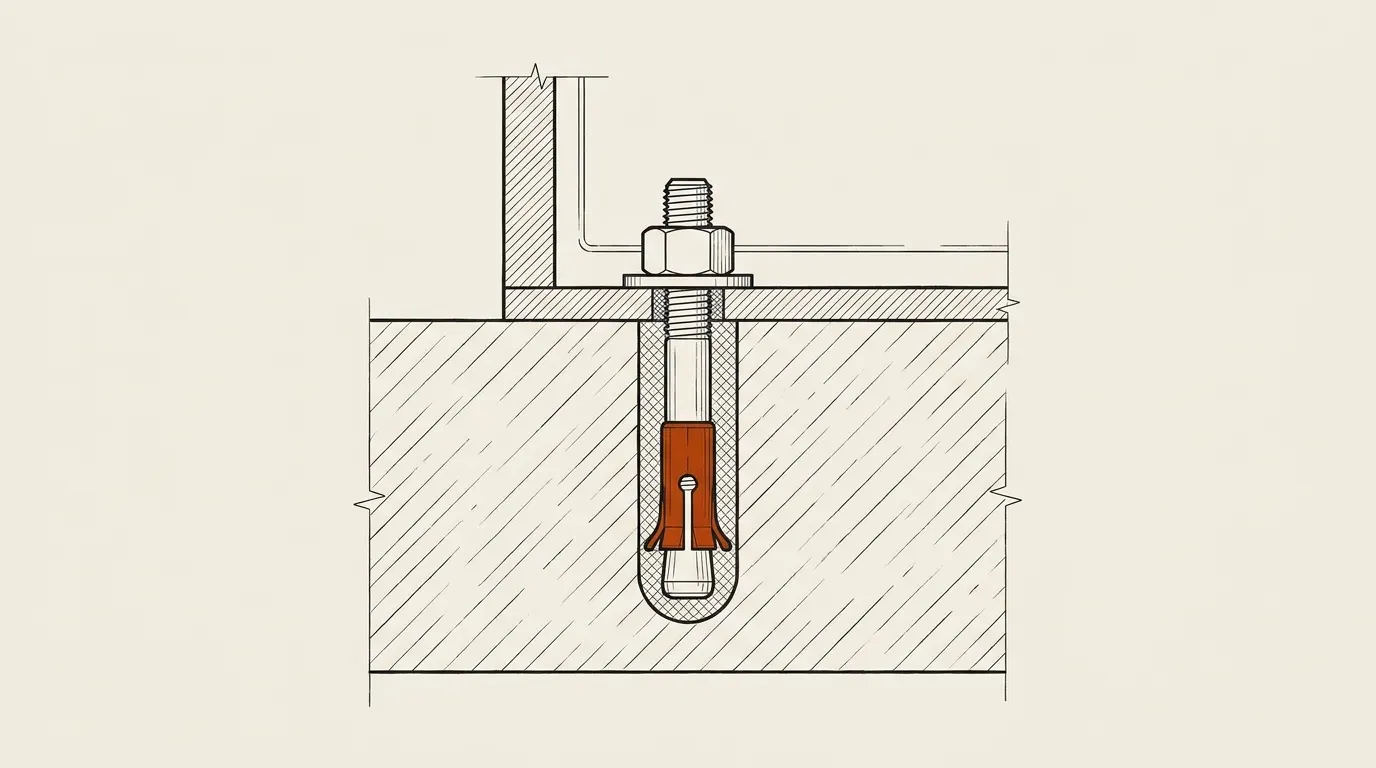
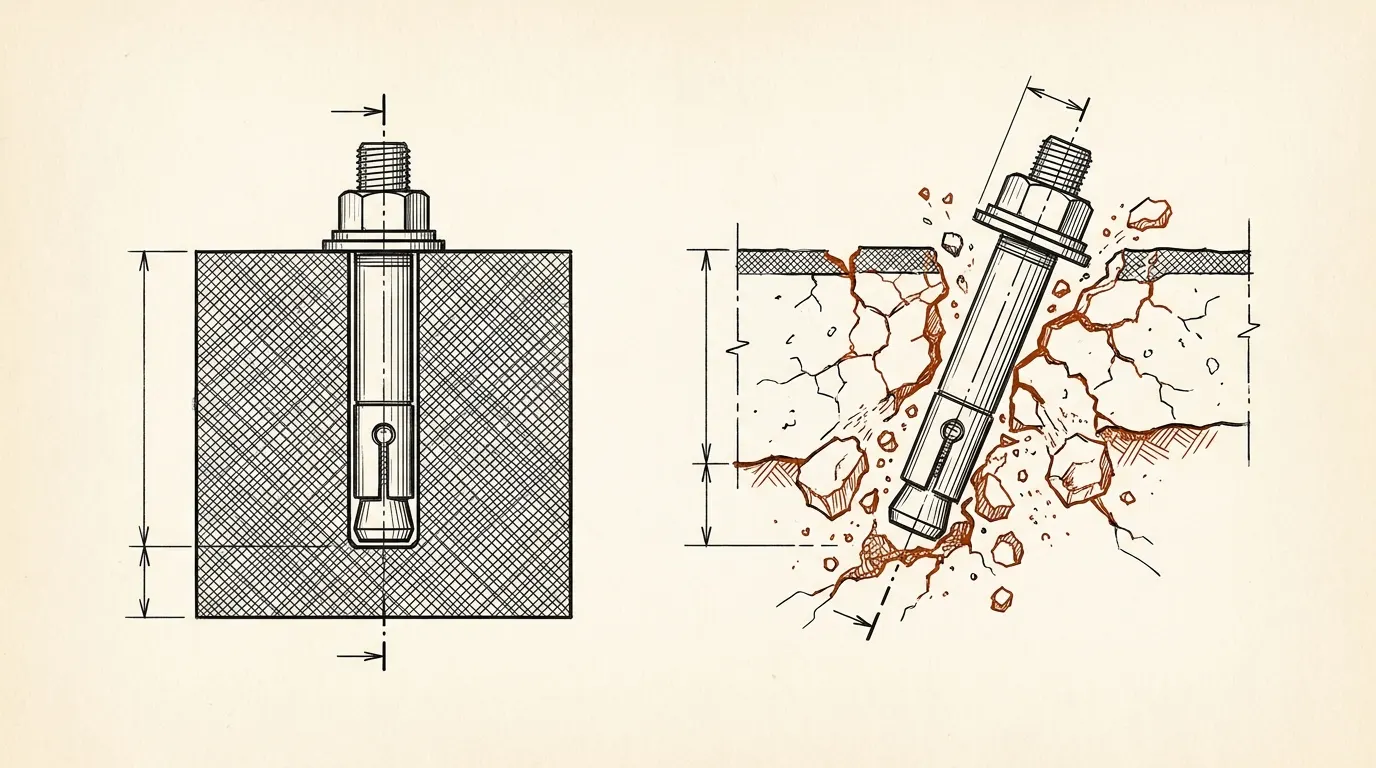
Wedge anchors (ITW Red Head Trubolt): Red Head's catalog says to use a carbide drill bit "with a diameter equal to the anchor diameter," drill deeper than the desired embedment, clean the hole, then tighten the nut 3 to 5 turns past hand-tight or to the specified torque. The catalog says the Trubolt is "only for use in concrete" and lists minimum edge distances and spacing for each size.
Screw anchors (Simpson Strong-Tie Titen HD): Simpson's catalog says to drill with a carbide bit the same diameter as the anchor, overdrill to the minimum hole depth, and blow the hole clean with compressed air. It warns that oversized holes reduce the anchor's grip and says to use a Titen HD "one time only."
Liberty's concrete-floor guide recommends galvanized or zinc-plated anchors at a minimum. It also notes concrete gives off moisture, and suggests a hard rubber mat under the safe or epoxy-sealing the slab first.
How to bolt a safe to a wood floor
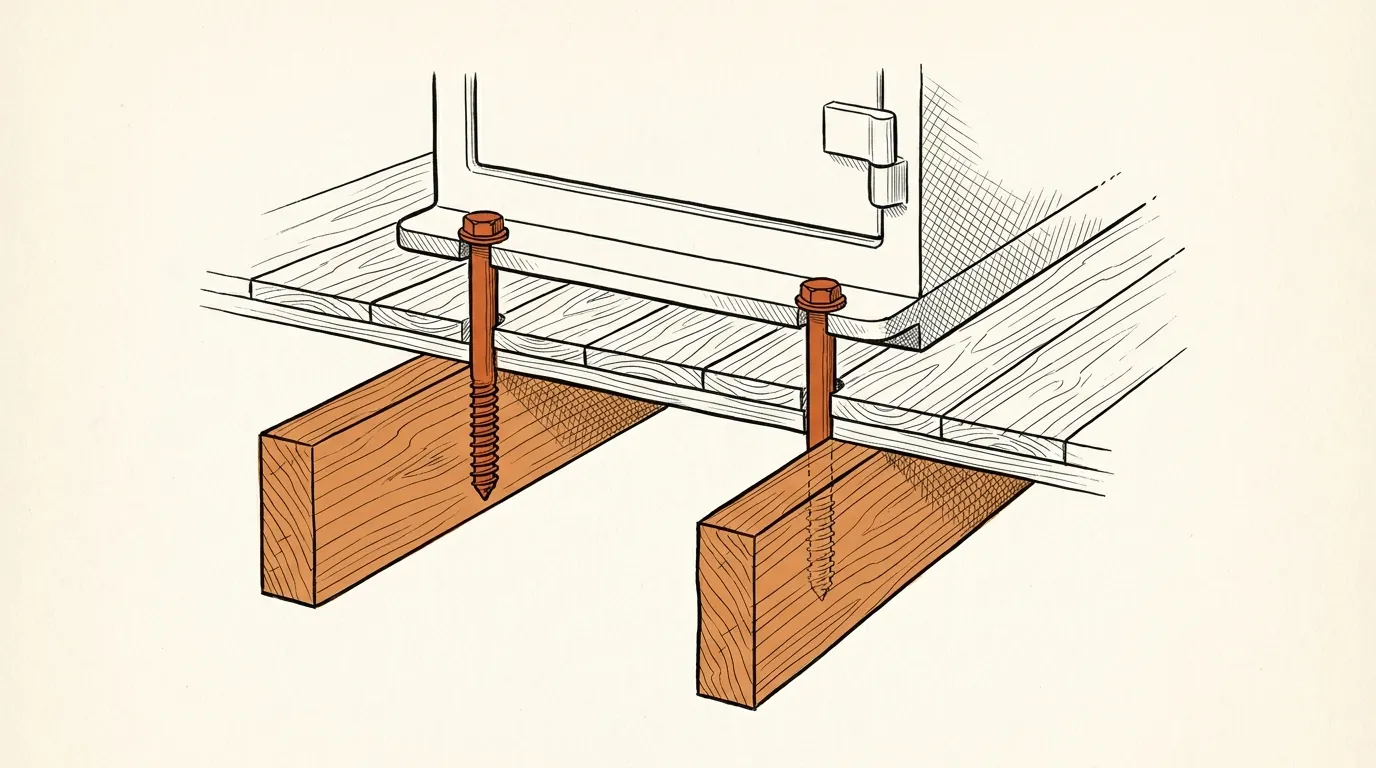
Wood takes lag bolts, not concrete anchors. Liberty's wood-subfloor kit covers hardwood, carpet, vinyl, linoleum and laminate laid over wood.
- Liberty: drill a 1/4-in hole at each of the four anchoring locations; secure the bolts with a 9/16-in socket.
- Browning: drill with a 5/16-in wood bit and install the lag bolts and washers through the safe floor.
- Stack-On GSXW-836: 5/16-in diameter, 2-1/2-in deep pilot holes for a wood floor.
Where you can, hit the joists. Liberty's anchoring best-practices page says lag bolts should be tightened into the floor joists "for maximum stability if possible." It also says to check what's under the floor first, to avoid drilling into pipes or wiring.
How to bolt a safe to carpet or tile
Carpet is fine as long as you're anchoring into the subfloor below. Stack-On's manual says to lift the carpeting to reach the mounting holes, then replace it. Browning warns against opening the door on "plush carpet" before the safe is anchored, because the open door can tip it forward. It also recommends a sheet of clear plastic between safe and carpet to stop rust stains.
Tile is where the advice splits. Liberty's anchoring guide says: "Unfortunately, you can't anchor a safe to a tile floor," because tightening the bolts can crack the tile. A second Liberty page suggests removing the tiles in the safe's footprint and anchoring to the concrete beneath. Same company, two answers. If you have tile, talk to a flooring professional before you drill.
The tile always cracks at the worst moment. That's the only thing it's reliable about.
How to bolt a safe to a garage floor and check for post-tension
A garage slab is usually ideal. Usually.
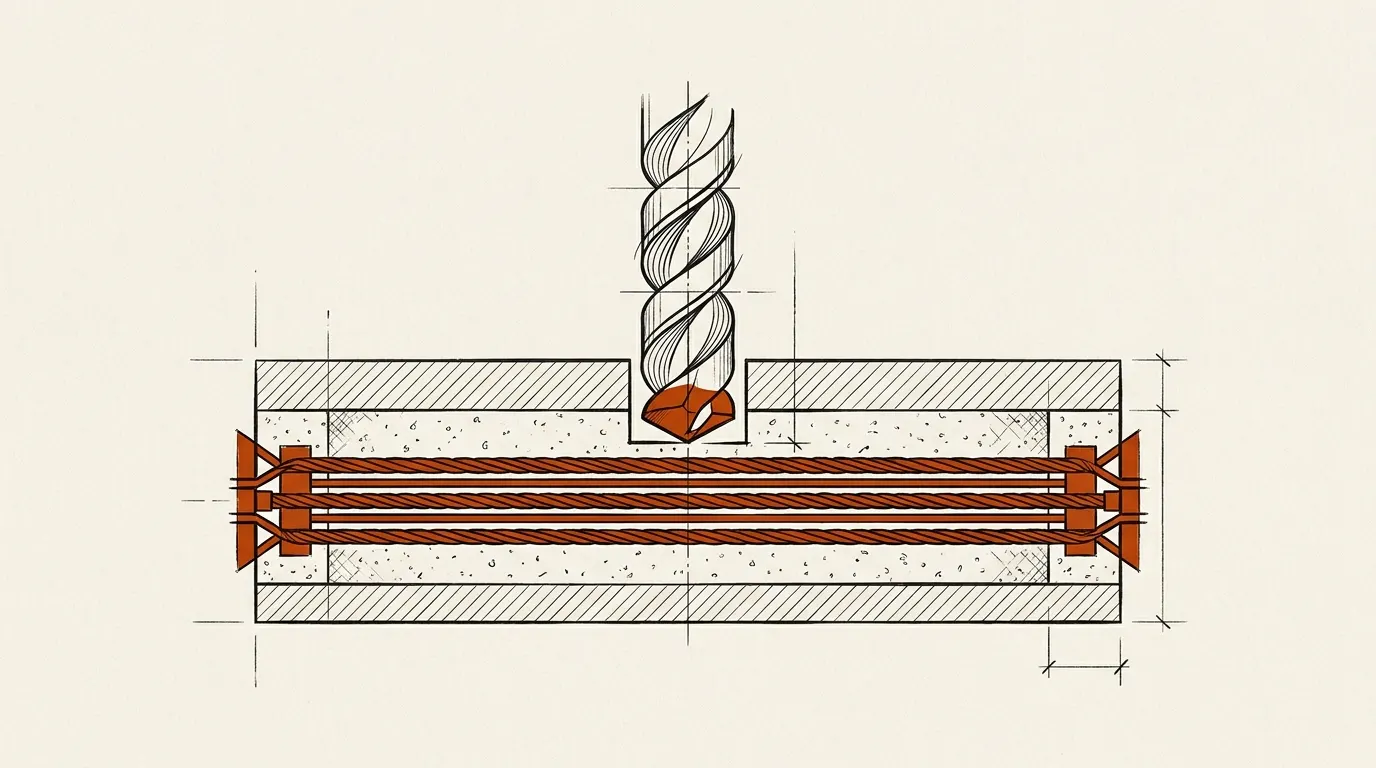
Liberty says the one time it can't bolt a safe down is "if you have a post-tension foundation," because of the risk of hitting a cable. Its concrete guide says post-tension slabs are stamped with a warning not to drill, cut or core, and that a damaged cable "can immediately snap out of the concrete."
The Post-Tensioning Institute's journal lists drilling for bolts among the causes of tendon damage and says a structural scan before making openings in a slab "will significantly reduce the risk." If you see the stamp, or your builder says post-tension, stop and call a professional installer.
Radiant floor heating and plumbing in the slab are the same kind of hazard. Liberty's advice to check what's beneath the floor before drilling applies to all of it.
How to bolt a safe to a wall: mostly don't
Wall anchoring is for safes designed for it. Liberty's best-practices page says some smaller safes are designed for wall mounting, but "it is not recommended for larger, freestanding gun safes," and that anchoring through a wall "can penetrate the fireboard, potentially compromising its fire rating." Stack-On's GSXW-836 manual says mounting through its wall vent holes voids the fire rating.
So: floor first, always. Wall only if your manual shows wall anchor points.
Here's the catch: anchors are only as good as the floor
An anchor holds as well as the material around it. Red Head's catalog says its wedge anchor is only for concrete, lists minimum edge distances and spacing for each size, and increases them for lightweight concrete. A lag bolt into a thin subfloor between joists holds less than one driven into a joist.
That's why the instructions say "into the joists if possible" and "check the slab first." The bolt itself is rarely the weak part. The floor around it is. Picture The Closet: carpet, pad, a thin subfloor, and four lag bolts that missed every joist. Better than nothing. Worse than it looks.
Skip it if: when bolting isn't the right move
- Post-tension slab. Don't drill. Liberty won't either.
- You rent and can't drill. Ask the landlord in writing. If the answer is no, a light safe is mostly fire and privacy protection.
- The safe isn't on its final spot. Anchor once, in the right place. Moving anchored safes means new holes.
- The manual says your fire or water rating depends on special hardware you don't have. Get the right kit first.
That's the job. Find the factory holes, check what's under the floor, drill to the anchor's size, clean the holes, and bolt it down. Then open the door all the way and confirm the safe doesn't move. It shouldn't.
Where to look next
Save this guide for later
Questions people ask about bolt safe to floors
Should you bolt a safe to the floor?
Manufacturers say yes. Liberty Safe says it always recommends bolting a safe down for security and safety reasons, and Fort Knox says anchoring is always recommended. The main exception Liberty names is a post-tension concrete foundation, which should not be drilled.
How many bolts does a gun safe need?
Use every factory anchor hole. The Liberty, Browning and Sports Afield Haven instructions we read all use four anchor points, one at each corner; SentrySafe's Executive safes use two lag screws. Your safe's manual gives the number for your model.
Can you bolt a safe on carpet?
Yes, over a wood or concrete subfloor. Liberty's wood-subfloor kit covers carpet, and Stack-On's GSXW-836 manual says to lift the carpet to reach the mounting holes. Browning recommends a sheet of clear plastic between safe and carpet to prevent rust stains.
Can you bolt a safe to a tile floor?
Liberty Safe says tightening anchors on tile can crack it. One Liberty page says you can't anchor to tile at all; another suggests removing the tiles under the safe's footprint and anchoring to the concrete beneath. Ask a flooring professional before drilling tile.
How do you bolt a safe to a concrete floor?
Mark the holes through the safe floor, move the safe, drill with a hammer drill and a masonry bit sized to the anchor, clean out the dust, reposition the safe and install the concrete anchors through the safe floor. Bit sizes vary by manufacturer and anchor, so follow your safe's manual.
Sources
- Anchoring Your Gun Safe to the Floor | Liberty Safe — accessed 2026-10-12
- How to Install a Gun Safe | Liberty Safe — accessed 2026-10-12
- What to Expect When My Safe Is Delivered | Liberty Safe — accessed 2026-10-12
- Your Gun Safe and Concrete Floors | Liberty Safe — accessed 2026-10-12
- Preventing Safe Tipping: Best Practices for Anchoring Gun Safes | Liberty Safe — accessed 2026-10-12
- Safe Installation 101: Professional Tips for Securing Your Home Safe | Liberty Safe — accessed 2026-10-12
- Browning Safes Owner's Manual (ProSteel Security Products) — accessed 2026-10-12
- Haven Series SA5925HX, SA5930HX & SA5942HX Instruction Manual (SA Consumer Products) — accessed 2026-10-12
- SentrySafe Executive Safes Owner's Manual (P56398) — accessed 2026-10-12
- SentrySafe Fire-Water Proof Bolt-Down Kit for FP-FPW Models | Master Lock — accessed 2026-10-12
- Stack-On GSXW-836 User Manual — accessed 2026-10-12
- FAQs | Cannon Safe — accessed 2026-10-12
- FAQ | Fort Knox — accessed 2026-10-12
- Trubolt Wedge Anchors, 2019 Catalog | ITW Red Head — accessed 2026-10-12
- Titen HD Heavy-Duty Screw Anchor, Anchoring and Fastening Systems Catalog | Simpson Strong-Tie — accessed 2026-10-12
- Dispelling the Myth About Unbonded Post-Tensioned Buildings | PTI Journal — accessed 2026-10-12