Portable Gun Safes: Handgun Cases That Lock and Travel
A portable gun safe is a small locking case for a handgun that you can carry, with a handle, a strap or a steel cable to tether it in a car or room. It trades weight for mobility, so the cable and the lock do most of the work. This page covers what to check before one goes in a car, a hotel or a suitcase.
Compare models
In this tableHandgun safes you can carry, with a handle, strap or cable tether. Values we could not confirm show as "—".
We earn a commission if you buy through our links, at no cost to you. Disclosure
No live products match this page yet. The table fills in automatically when listings that fit the rule are available on Amazon US.
A portable handgun safe is a lock box built to move
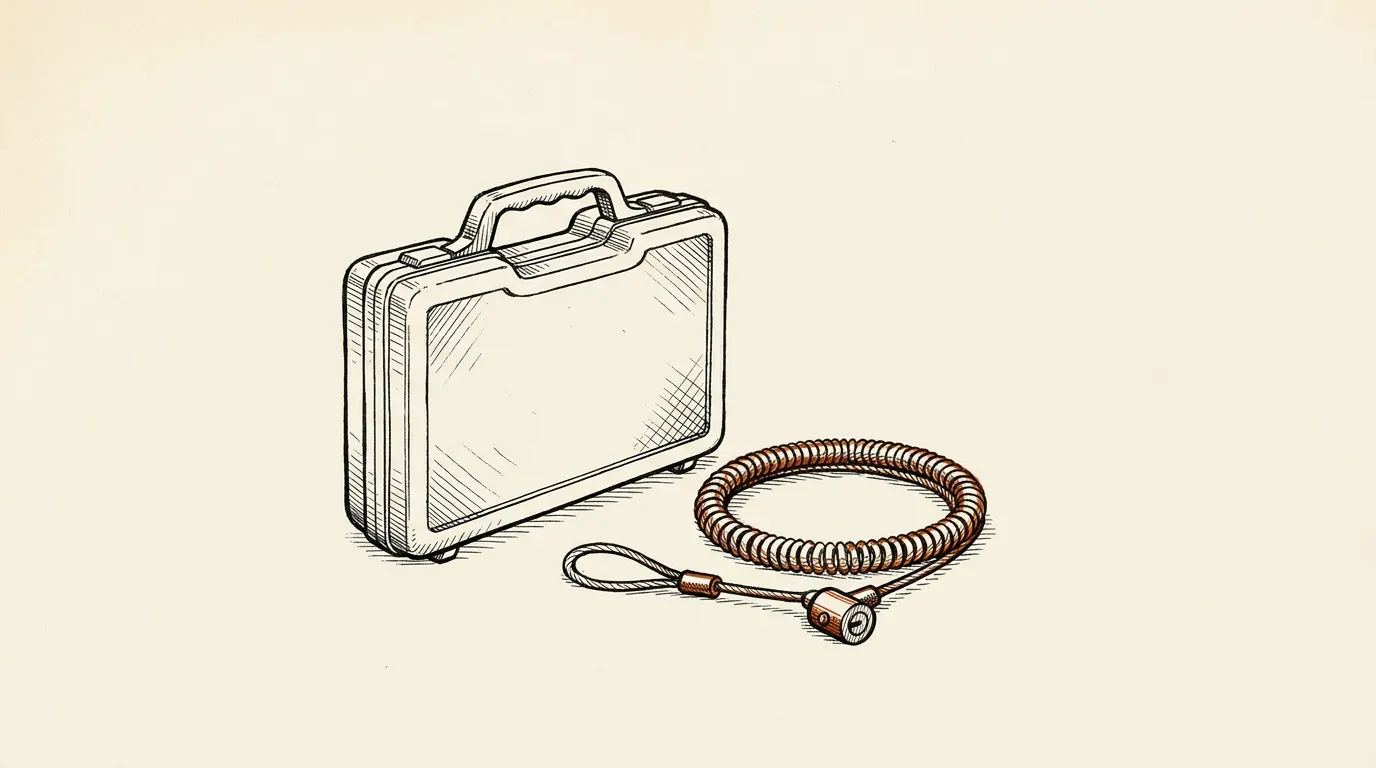
A portable handgun safe is a small steel or hard-plastic case with a lock, sized for one or two handguns and the odd magazine. What makes it portable rather than just small: a carry handle or strap, and usually a steel cable that loops around something fixed. It sits under the gun safes category, next to two close relatives:
- Car gun safes — often bolted into a console or under a seat, so they move with the vehicle but not out of it
- Handgun lock boxes — small portable boxes that overlap heavily with this page
The table on this page lists handgun safes and vehicle safes that our data marks as portable — with a handle, a strap or a cable tether. You'll see them sold as portable gun vaults, travel gun safes, pistol cases with locks and cable safes. The names vary; the trade-off doesn't. A portable safe is light so you can move it, and light enough that someone else can too.
Who a travel gun safe suits, and when to choose something else
A portable gun safe suits you if:
- You move a handgun between home, car and range and want it locked at every stage
- You travel and stay in hotels, rentals or with family
- You want a locked case in a vehicle without drilling the car
- You need a locked container for flying — see the air travel section below
Choose something else if:
- It will stay in one place. A bedside gun safe or a bolted car safe will do the stationary job better.
- You need resistance to a determined attack. Thin steel and a cable buy time against a casual thief. They aren't a burglary-rated safe.
- You need fire protection. Check the listing for a named fire test and a lab; if it names neither, don't count on one.
Children and access
If children will be around — in a car, a relative's home, a hotel room — the case should stay locked whenever the handgun is not in your hands, with the key or code kept where a child cannot find or reach it. A case reduces access only when it is closed and locked. California, for example, keeps an official roster of firearm safety devices certified for sale, which includes many lock boxes. Storage and transport rules differ by state; check your state's official guidance. This page is not legal advice.
What to look for in a portable gun safe
Five things decide whether a case is worth carrying: the lock, the backup, the steel, the cable and the fit.
The lock and its backup
- Key lock: simple, no battery. Keep the key apart from the case.
- Combination or push-button lock: no key to lose, no battery to fail.
- Keypad: fast, but adds a battery and a backup key.
- Fingerprint: fastest when it reads, but check the model's recall history. Bulldog Cases, for example, recalled about 33,500 biometric pistol vaults in February 2024 because the lock could be opened by unauthorized users. Search the model on cpsc.gov before you buy.
If the lock is electronic, find where the battery lives and how the backup key works before you leave home.
Steel and the drop question
Lower gauge numbers mean thicker steel: under the federal standard gauge, 16-gauge is 0.0625 in and 12-gauge is 0.1094 in. A thin case flexes; a thicker one resists a pry tool longer. Listings that say "heavy-duty steel" without a gauge are telling you how the Marketing Department feels about the steel, not how thick it is.
Portable cases get dropped. UL 1037, the standard for residential security containers, includes a drop test for lighter or portable containers: they're dropped onto concrete and the door must not come ajar. If a listing claims that rating, read it for the level and the lab. The concern is real: in 2018, about 25,000 electronic handgun safes sold by Harbor Freight Tools were recalled because they could open on impact.
The cable
The cable is what keeps a portable safe where you left it. Check:
- Thickness and material — a steel cable with a stated diameter
- Length — enough to reach a seat frame, bed frame or fixed post from where the case sits
- How it attaches — a cable that locks inside the case is harder to get at than one clamped outside
A cable is a deterrent, not a vault. It stops grab-and-go. It doesn't stop someone with time and cutters.
Hotels, rentals and other people's homes
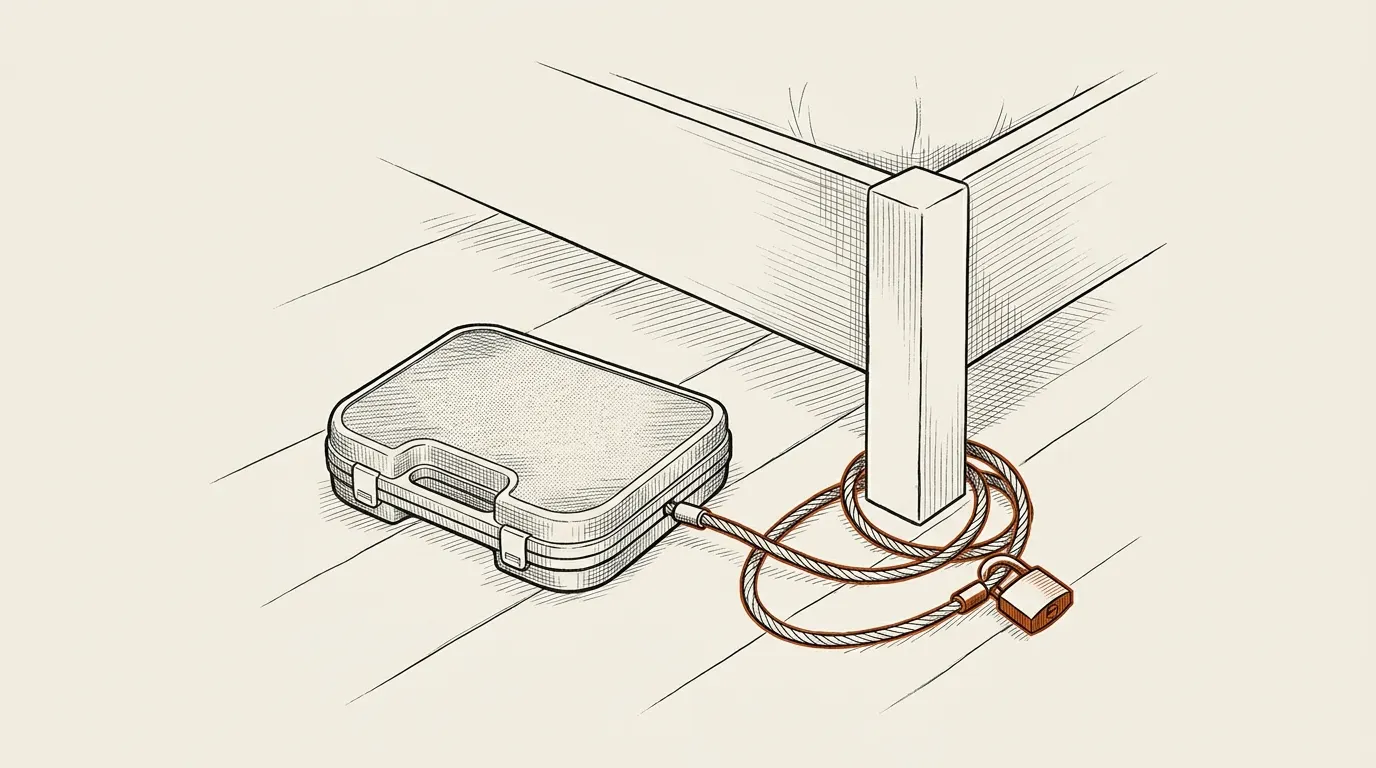
Away from home, the fixed point you tether to matters as much as the case. A bed frame, a heavy desk leg or a closet rail bolted to the wall works; a chair doesn't. Keep the case out of sight, and remember that housekeeping and other guests may enter the room. If the case uses a keypad, set a code that isn't your birthday or the room number, and test the backup key before you leave home, not at the front desk.
Interior fit
Measure the handgun with any optic, light or magazine extension attached, and compare it with the interior dimensions. Foam inserts protect the finish but take up space; some can be cut to shape.
How to compare the cases in this table
Every row is a handgun or vehicle safe marked portable in our data. A dash means no confirmed value — not that the feature is missing.
Choose in this order:
- How you'll travel. Flying, driving or staying put changes which lock and case style makes sense.
- Lock and backup. Key, combination, keypad or fingerprint; then confirm the backup.
- Steel gauge. Lower number, thicker steel.
- Cable. Included, stated thickness, and long enough for where you'll tether it.
- Interior fit. Your handgun, measured with what's attached to it.
Our gun storage ideas guide compares portable cases with other ways to lock up a handgun, and the UL safe ratings guide explains what a UL 1037 label covers.
Flying with a portable gun safe: what TSA says
The TSA's rules are short and specific. Unloaded firearms may be transported only in checked baggage, in a locked hard-sided container. The container must completely secure the firearm from being accessed, and locked cases that can be easily opened are not permitted. You must declare the firearm to the airline when you check the bag. Firearms are not allowed in carry-on baggage.
Airlines can add their own rules, and state and local laws apply at both ends of the trip. Read the TSA page and your airline's policy before you pack.
Pick the case that fits how you travel, the lock you'll actually use, and a cable long enough for where you'll stay. Tether it out of sight, keep the key on you, and check the price.
Related pages
Questions people ask about portable gun safes
What is a portable gun safe?
A small locking case sized for one or two handguns, light enough to carry. Many come with a steel security cable to loop around a fixed point such as a car seat frame or a bed frame. Some are hard cases with a key lock; others have a keypad, fingerprint or combination lock.
Can I fly with a portable gun safe?
The TSA says unloaded firearms may travel only in checked baggage, in a locked hard-sided container that completely secures the firearm, and must be declared to the airline. Firearms are not allowed in carry-on bags. Check the TSA page and your airline's rules before you travel.
Does a portable gun safe stop theft?
It slows a casual thief and keeps the firearm locked. A light case can still be carried off if it is not tethered, and a cable can be cut with the right tools. Tether it out of sight, to something fixed.
What is the best travel gun safe?
There is no single answer, and we do not rank them. Compare the lock and its backup, steel thickness, the cable, the interior size for your handgun, and whether the case is accepted for your way of travel. The table on this page lists the portable models we track with those specs.
Are portable gun safes legal in every state?
The case itself is generally a storage product, but rules for carrying or transporting a firearm in a vehicle differ by state. Check your state's official guidance and the rules of any state you travel through. This page is not legal advice.
Can I leave a portable gun safe in a car?
If you do, tether it with its cable to a fixed part of the car, such as a seat frame, and keep it out of sight. Heat inside a parked car can affect electronics and batteries, so check the manual for operating temperatures. State rules on firearms in vehicles differ; check your state's official guidance.
Sources
- Transporting Firearms and Ammunition (Transportation Security Administration) — accessed 2026-10-12
- Intertek requirement-change notice: UL 1037 revision 9-9-2016, Section 54 Residential Security Containers — accessed 2026-10-12
- 15 U.S. Code sec. 206 - Standard gauge for sheet and plate iron and steel (Cornell LII) — accessed 2026-10-12
- Roster of Firearm Safety Devices Certified for Sale (California DOJ) — accessed 2026-10-12
- Harbor Freight Tools Recalls Handgun Safes Due to Serious Injury Hazard (CPSC) — accessed 2026-10-12
- Bulldog Cases Recalls Biometric Gun Safes Due to Serious Injury Hazard and Risk of Death (CPSC) — accessed 2026-10-12