Long Gun Safes: Sizing a Safe for Rifles and Shotguns
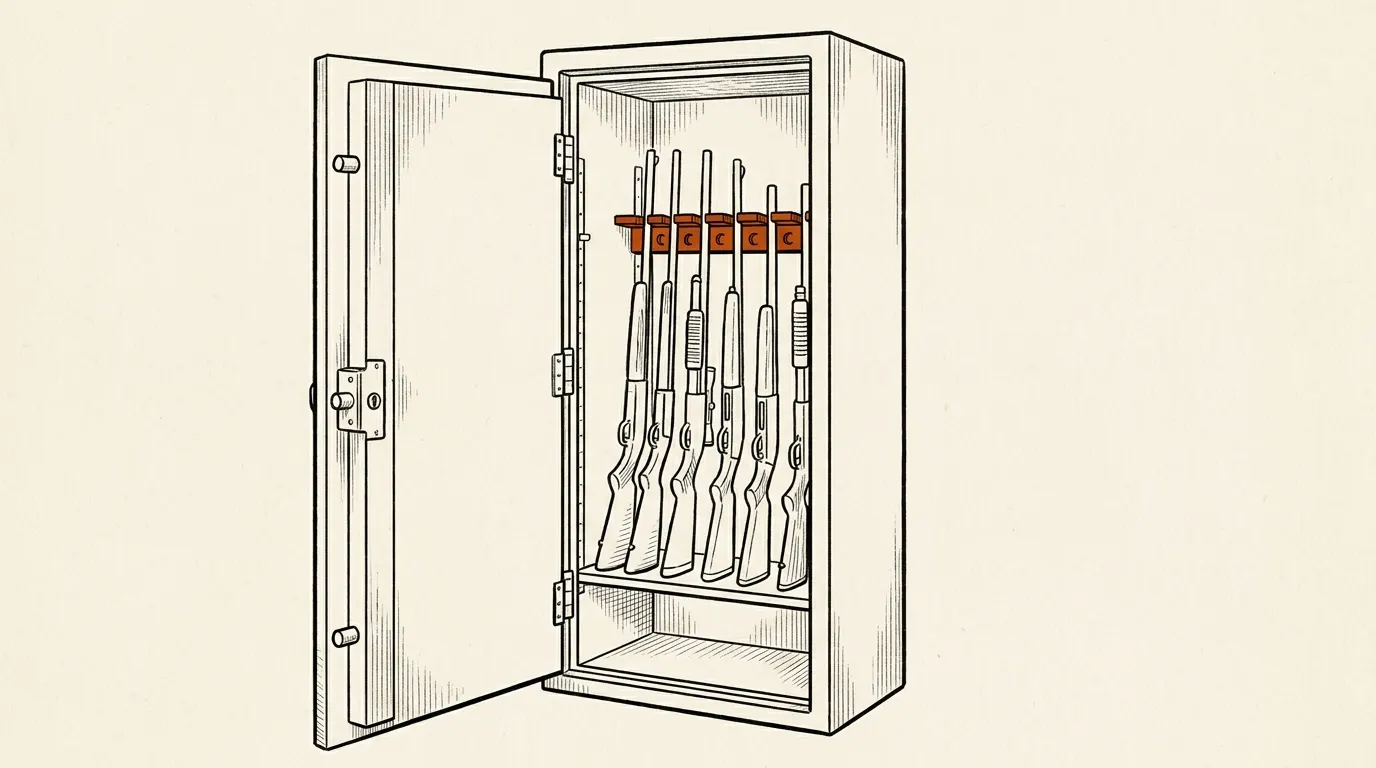
A long gun safe is a gun safe or cabinet tall enough to stand rifles and shotguns upright. On this page that means at least 50 in tall outside, and the table lists every one we track. The door will tell you how many guns it holds. The interior dimensions will tell you the truth.
Compare models
In this tableGun safes and cabinets at least 50 in tall, sized for rifles and shotguns. Values we could not confirm show as "—".
We earn a commission if you buy through our links, at no cost to you. Disclosure
No live products match this page yet. The table fills in automatically when listings that fit the rule are available on Amazon US.
A gun safe for long guns is defined by one measurement before any other: interior height. Everything else on the listing, from the gun count to the bolt count, comes after that. This page covers what to check on a long gun safe, how small rifle safes and cabinets differ from full-size safes, and how to read the table. Our parent page on gun safes covers the whole category.
A long gun safe is sized by its longest gun
Rifles and shotguns are stored upright, usually with the stock down and the barrel in a rest. That makes height the hard limit. A safe can be wide enough for twenty guns and still too short for one of them.
Liberty Safe's sizing article puts the requirement simply: the safe should be "tall enough to house your longest rifle or shotgun." It's the first check because it's the only one you can't work around with shelving.
The table on this page includes both gun safes and gun cabinets, as long as they are at least 50 in tall outside. That's a starting filter, not a guarantee of fit. Walls, the door and the floor take their share, so interiors are several inches smaller than exteriors.
Cabinets and safes are not the same product, even at the same height. A gun cabinet is usually lighter steel with a simpler lock and no burglary or fire rating. Our guide to gun safe vs gun cabinet explains the differences in detail.
Who a rifle safe suits, and who should look at something else
A long gun safe is the right tool if:
- You own rifles or shotguns. Even one. Long guns don't fit in handgun safes, and lying them flat wastes most of a cabinet.
- You want one locked place for several firearms. Long guns, handguns on a door panel or shelf, and the paperwork that goes with them.
- You can give it a permanent spot. Tall safes need floor space, a solid floor and, ideally, anchoring.
Look elsewhere if:
- You only own handguns. A handgun safe is smaller, cheaper to place and faster to open.
- You need a vehicle solution. Long guns in a truck need a different product.
- Your collection will grow fast. Start with large gun safes rather than replacing a small one in two years.
On child access, plainly: the U.S. Attorney's Office for the District of Vermont publishes a Department of Justice handout whose core advice is to unload each firearm, store it locked, and keep ammunition locked separately. Storage requirements also differ by state, and nothing here is legal advice. As one example of an official source, California's Department of Justice publishes its gun safe standards.
What to look for in a gun safe for long guns
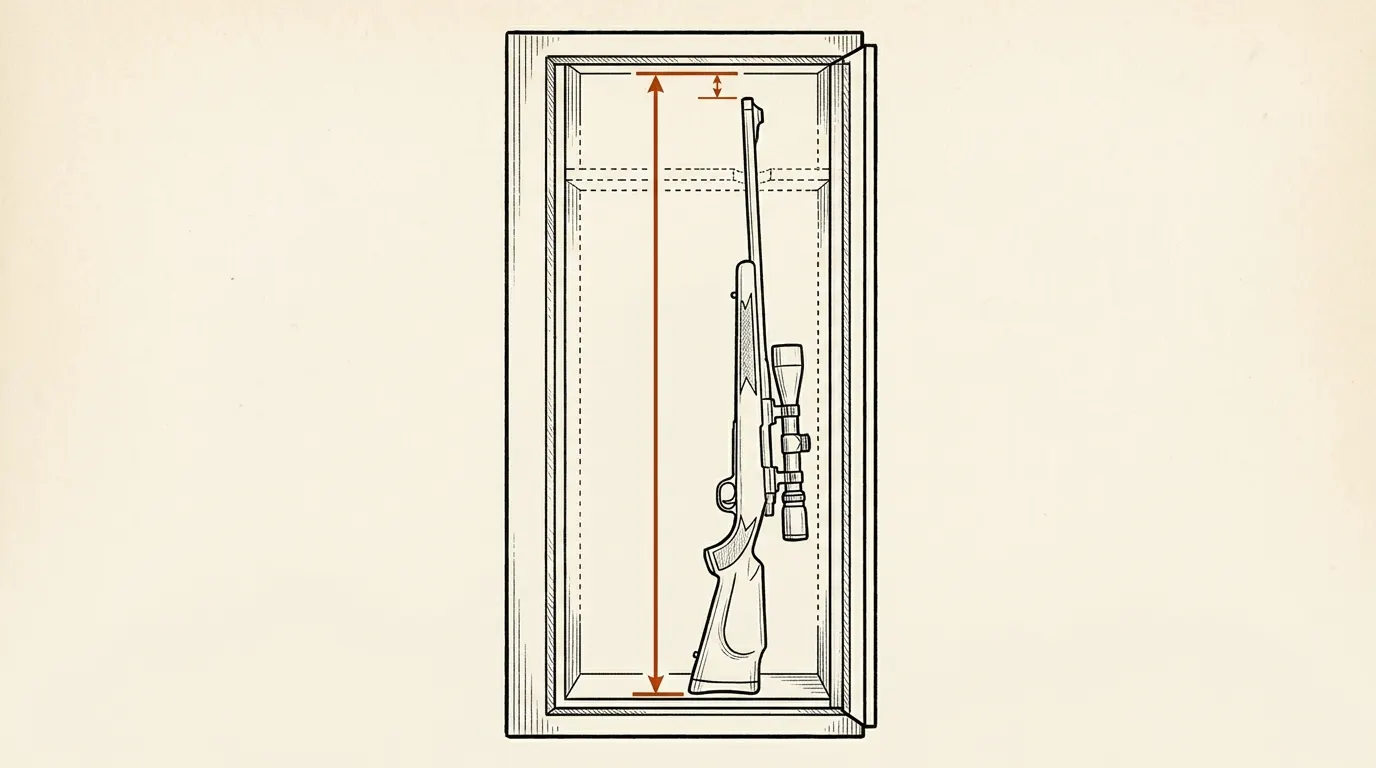
Interior height, with the optic on. Measure your longest long gun with any optic, light or muzzle device fitted. Compare that with the interior height, not the exterior.
Interior depth. Scopes stick out sideways, and pistol grips stick out below. A scoped rifle needs depth as well as height. Check whether the interior has barrel rests or racks that can be moved or removed.
The gun count, treated as an estimate. Cannon Safe says it plainly: "Advertised gun capacity is a guide," and scopes, pistol grips, accessories and interior shelving affect how many firearms fit. Ten rifles, the door said. Ten rifles, if none of them owns a scope. That's why a 5 rifle gun safe or a 10 long gun safe should be judged by interior width and rack layout, not the number in the name. Liberty Safe's advice to first-time buyers is to "select the largest safe they can afford."
Steel gauge, read backwards. For sheet steel, a lower gauge number means thicker steel: under the federal standard gauge, 10-gauge is 0.1406 in and 14-gauge is 0.0781 in. Cabinets often sit at the thinner end. If the listing gives inches or millimetres, use those.
A burglary rating. Under UL 1037, a Level I Residential Security Container (RSC) must resist a 5-minute attack by one person with common hand tools and a small electric drill. It's a floor, not a vault, but it's a tested floor. Many cabinets have no rating at all.
A fire rating, if you want one. An RSC label is a burglary rating only and says nothing about fire. If the safe will also hold papers or heirlooms, look for a separate fire rating that names a time, a temperature and who tested it. Our fire-rated gun safes page lists them.
Room for humidity control. Long guns often sit untouched for months. A dehumidifier rod or desiccant needs space and, for a rod, a power entry. Our guide to gun safe humidity covers the options.
California's standard, if it applies to you. California DOJ defines a qualifying gun safe by construction (including walls of at least 12-gauge steel and at least three ½-inch locking bolts) or by an RSC listing from a Nationally Recognized Testing Laboratory.
Anchoring. A tall, narrow box is a tipping risk as well as a theft risk. Liberty Safe publishes anchoring guidance aimed at preventing tipping; your manual will have the method for your model.
Small long gun safes: AR-15 safes, 3 rifle safes and single rifle safes
Small rifle safes and cabinets are sold for a handful of guns. They're a reasonable answer for a first rifle, a single AR-15 or a few shotguns. The same checks apply, with more weight on two of them.
- Depth for the AR. Pistol grips, magazines and optics make an AR wider and deeper than a hunting rifle of the same length. Check depth and rack spacing, not just height.
- Steel and rating. At this size, the difference between a cabinet and a safe is often the whole product. Look for the gauge and any RSC rating. If neither is stated, assume a cabinet.
Small gun safes for rifles can be light. Light means easy to place, and easy to move for someone else as well. Anchor it. See our small gun safes page for safes advertised for 10 long guns or fewer.
How to read the table and compare long gun safes
The table lists gun safes and gun cabinets at least 50 in tall. A dash means a value is not confirmed. Products with unknown height stay in so you can check them.
- Start with the Type column. Safe or cabinet. That tells you which of the following checks will matter most.
- Then height and the interior. Use the interior dimensions where they're listed. Compare them with your longest gun, measured with its optic.
- Then the gun count, discounted. Use it to compare models from the same maker, not to decide how many guns you can store.
- Then steel, lock and ratings. Gauge, lock type, RSC rating and fire rating, in whatever order matches your priorities.
For layout ideas once the safe arrives, see gun safe organization ideas. For full sizing detail, our guide to gun safe dimensions compares interiors by size class.
Brands that make long gun safes and cabinets
The brands below have long gun safes or cabinets in this table. Each brand page lists its models with dimensions, steel and ratings where confirmed.
Measure your longest gun with everything fitted, add a few inches, and compare it with the interior height in the table. Then compare steel, lock and ratings among the safes that pass. Check the price, and bolt it down where it will stand.
Related pages
Questions people ask about long gun safes
What size safe do I need for long guns?
Start with interior height. Measure your longest long gun with any optic or muzzle device fitted and compare it with the interior height on the listing. Then check interior depth for scopes, and leave room for guns you may add later.
How accurate is the gun capacity on a long gun safe?
Treat it as an estimate. Cannon Safe says advertised gun capacity is a guide and that scopes, pistol grips, accessories and interior shelving affect how many firearms fit.
Is there a safe for a single rifle or a few AR-15s?
Yes. Small rifle safes and cabinets are sold for a handful of long guns. Check the interior height and depth against your rifle with its optic fitted, and look at the burglary rating and steel gauge, which vary widely at this size.
What is the difference between a rifle safe and a rifle cabinet?
There is no single legal definition of either. In practice, check steel thickness, the lock, whether the product has a UL Residential Security Container (RSC) rating and whether it has a fire rating. Cabinets are usually lighter and often unrated.
Does a long gun safe need to be bolted down?
Anchoring is recommended for any gun safe where the manufacturer provides for it. A tall, narrow safe or cabinet is also a tipping risk when it is not anchored, so follow the manual's anchoring instructions.
Sources
- How To Buy A Gun Safe (Cannon Safe) — accessed 2026-10-12
- What Size Gun Safe Do I Need? (Liberty Safe) — accessed 2026-10-12
- Preventing Safe Tipping: Best Practices for Anchoring Gun Safes (Liberty Safe) — accessed 2026-10-12
- UL 1037 Antitheft Alarms and Devices (UL Standards & Engagement) — accessed 2026-10-12
- Intertek requirement-change notice: UL 1037 revision 9-9-2016, Section 54 Residential Security Containers — accessed 2026-10-12
- 15 U.S. Code sec. 206 - Standard gauge for sheet and plate iron and steel (Cornell LII) — accessed 2026-10-12
- Gun Safe Standards (California DOJ, Office of the Attorney General) — accessed 2026-10-12
- Safe Storage of Firearms: Unload it, Lock it, Store it (U.S. Attorney's Office, District of Vermont) — accessed 2026-10-12