Gun Safe Organization Ideas That Survive the Second Year
Every gun safe is tidy on delivery day. The shelves are level, the barrel rests are empty, and the box says it holds more guns than you own. Two years later there's a holster on the floor and a passport behind a shotgun. Organization isn't a product. It's a few decisions, made once, in the right order.
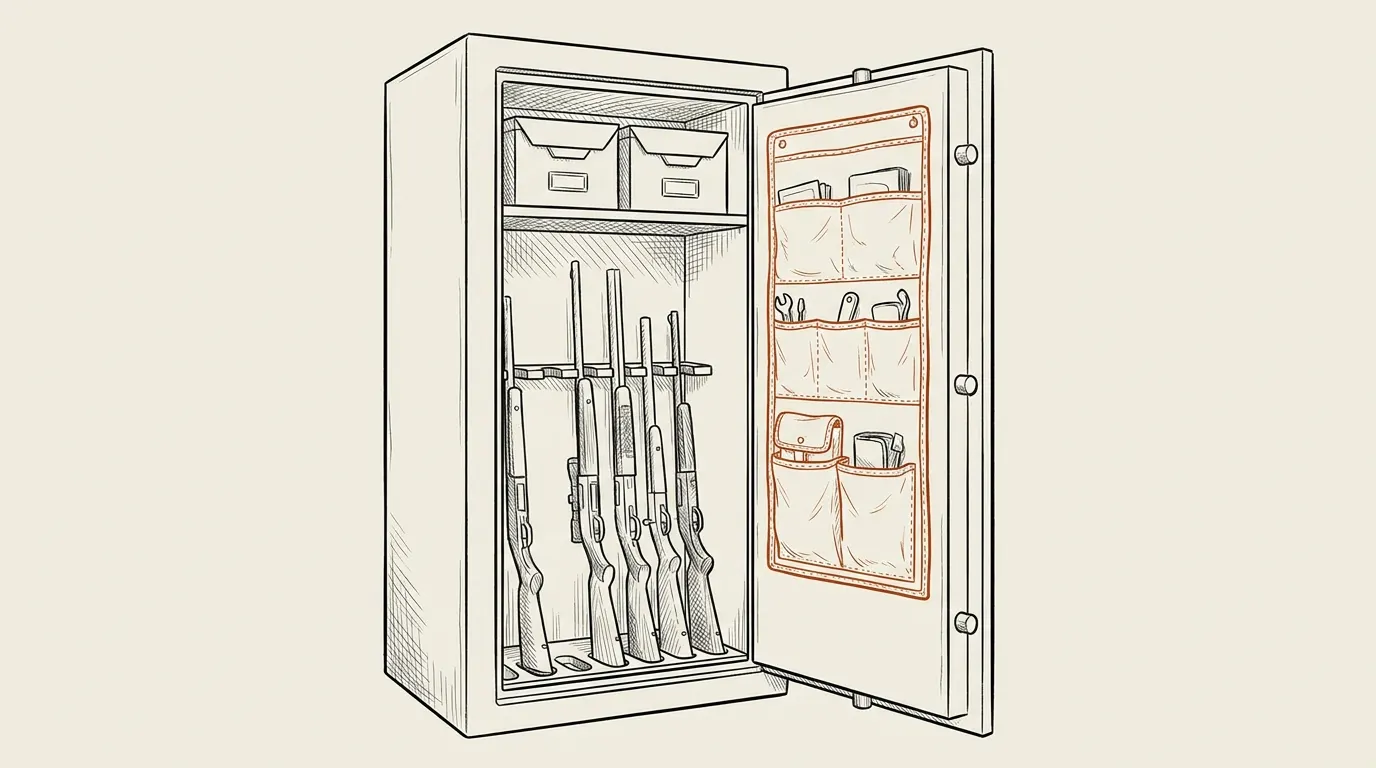
Short answer: Good gun safe organization ideas come down to order. Inventory and measure first. Then pick a layout: long guns in the barrel rests, handguns on shelves or a door panel, documents high and dry. Leave space for a hygrometer and for air to move. Keep leather off the steel. Buy organizers last, once you know what's left over.
Most gun safe organization problems are really sizing problems that showed up late. If you're still choosing the safe, start with our gun safes page and the gun safe dimensions guide — the cheapest organizer is a safe with room to spare. If the safe is already bolted down, read on.
How to organize a gun safe: inventory first, accessories last
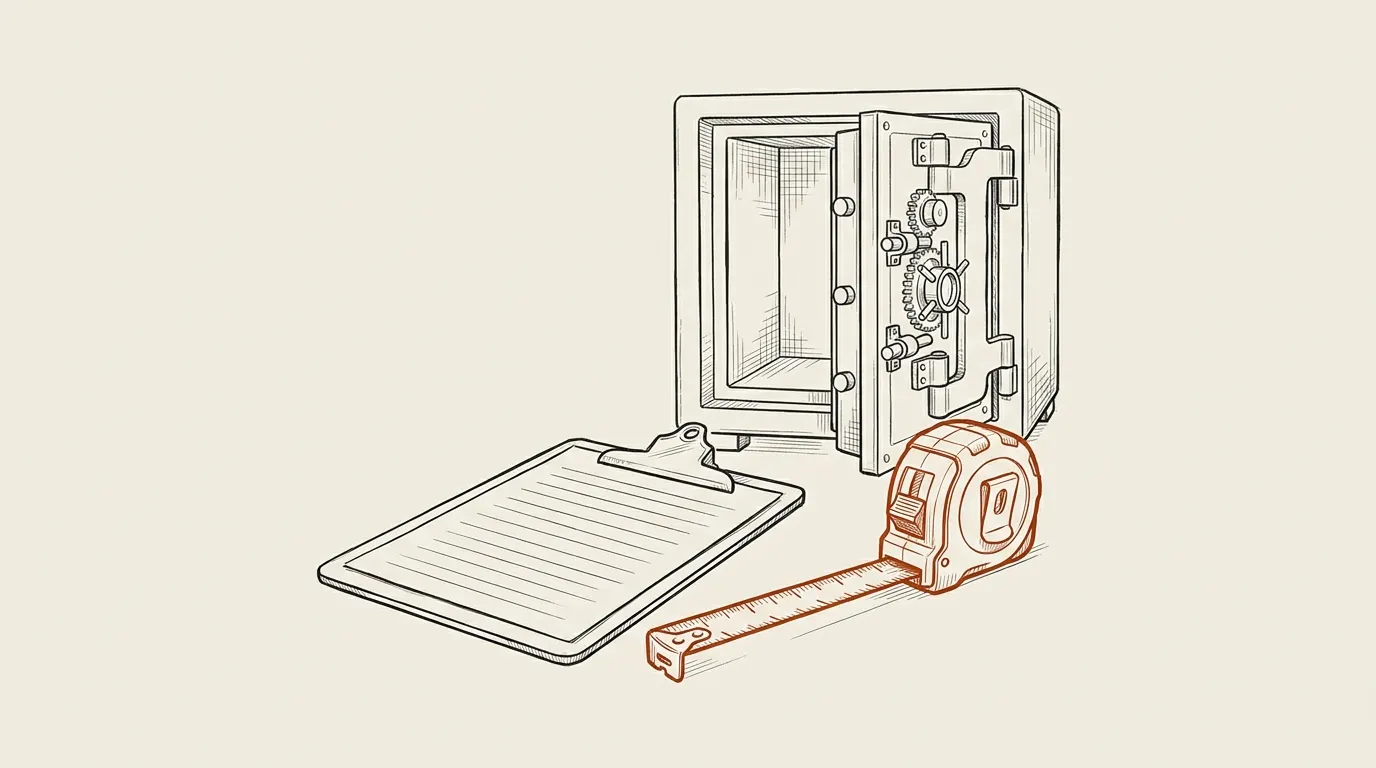
The order matters more than the products. Here's the sequence I'd follow.
- Empty it. All of it, onto a clean surface.
- Write an inventory. Make, model, serial number for each gun. Add documents and valuables.
- Measure the widest guns. Scopes, lights and bipods take room, so measure the guns that have them.
- Sort by how often you reach for them. Weekly, seasonal, rarely.
- Choose the layout. Then, and only then, decide whether you need an organizer.
The inventory is worth doing for its own sake. The Lewisburg, Tennessee police department's burglary advice is to keep a home inventory of valuables with brand names, model numbers and serial numbers, and to photograph or video them. Keep a copy outside the safe. If the safe ever leaves without you, the list shouldn't leave with it.
Before anything goes back in, check each gun is unloaded. The Department of Justice's safe-storage handout says to unload each firearm before storing it, and to keep ammunition locked in a separate location.
Where to look next
Gun safe interior ideas: the layouts manufacturers already built
Before buying anything, find out what your interior can already do. Many gun safes ship with a configurable interior, and the manual is the place to look.
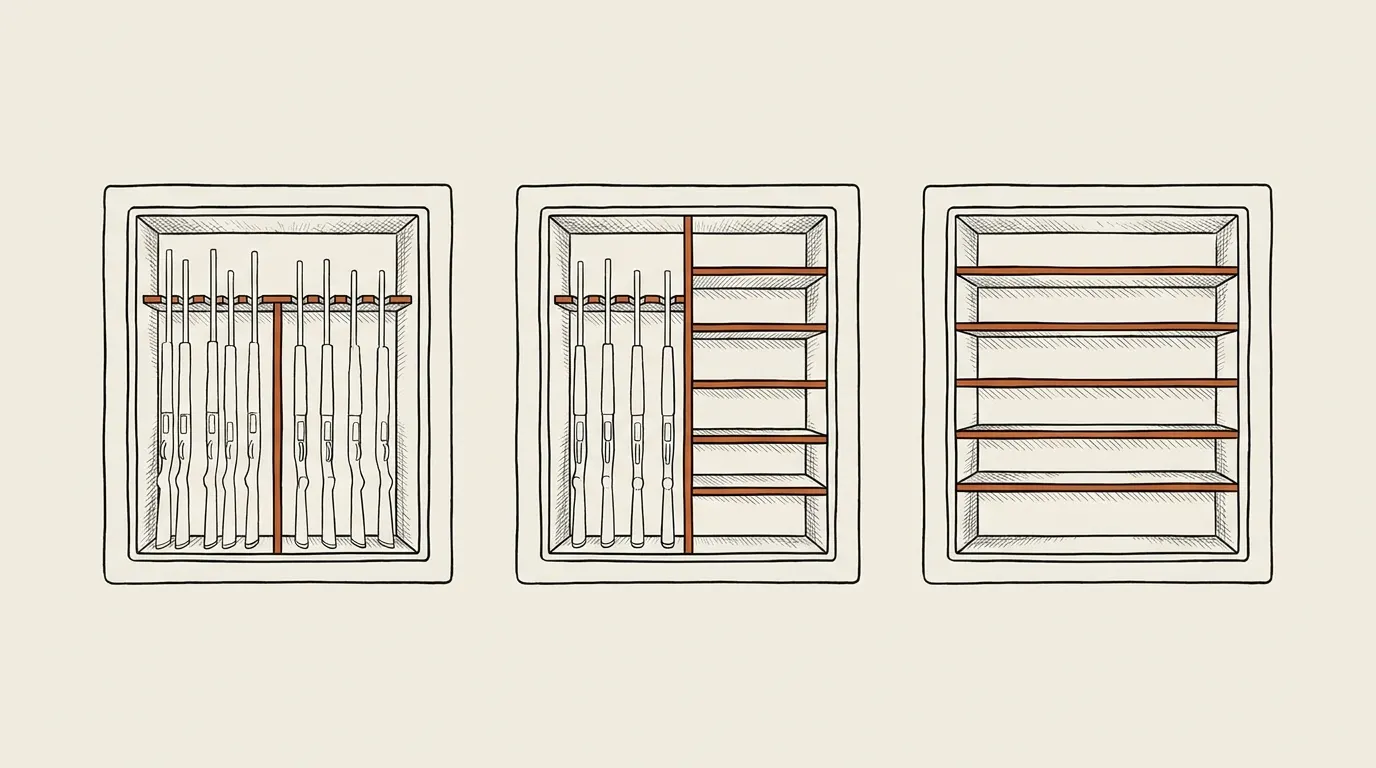
Liberty Safe is a useful example because it documents its systems publicly. Its interiors article describes:
- Dual Flex: two layouts, one gun-focused and one shelving-focused.
- 3-in-1: three layouts, from long-gun priority to shelving for valuables, or a mix.
- 4-in-1: four layouts, from all long guns to all shelving, or a combination.
- 6-in-1: six layouts, offered in its largest safes.
- Pro Flex: shelves that hook into a back-wall system at variable heights, with no middle divider.
Other makers use other systems, and older safes may have fixed shelves. Either way, the idea is the same: the interior is meant to change as the collection does. Rearranging what you have costs nothing.
The shelves were adjustable all along. Nobody had read page nine.
Gun safe shelving ideas: what goes where
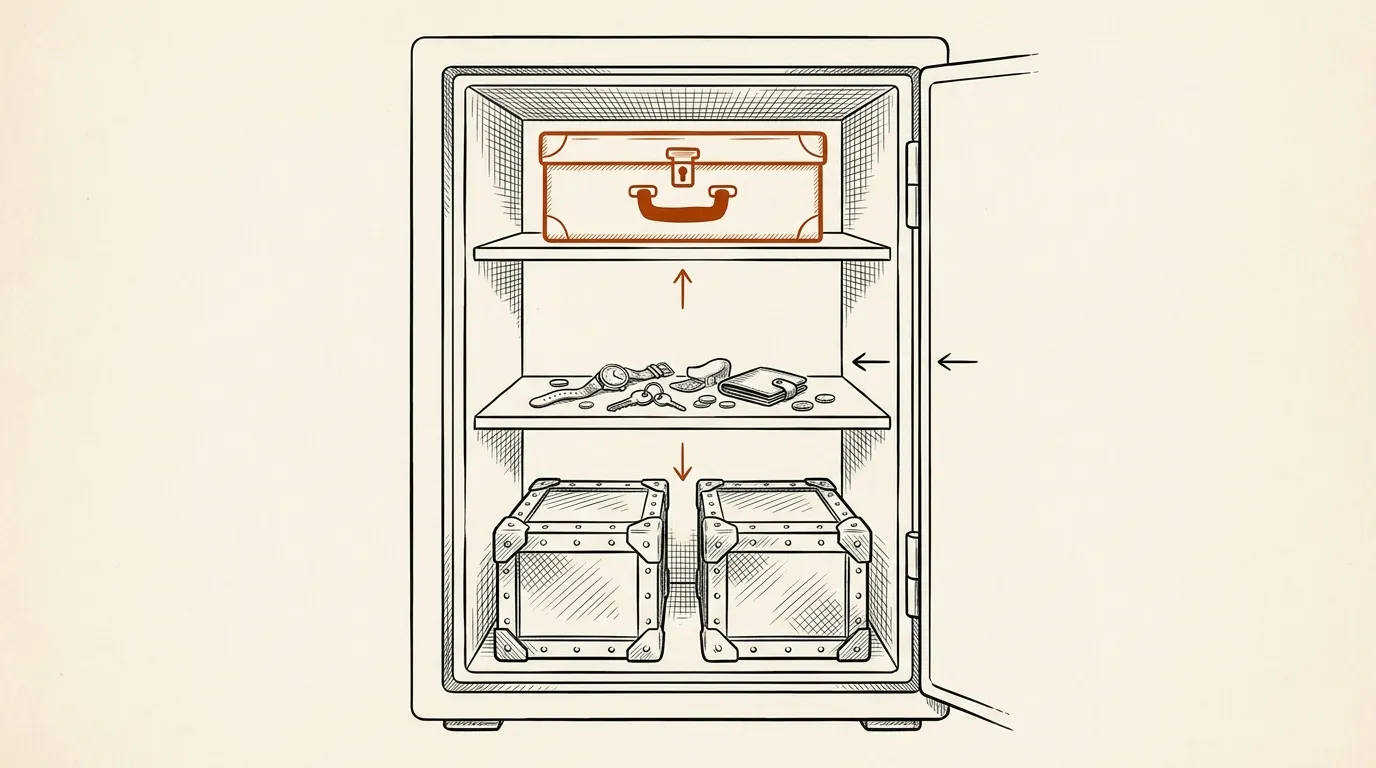
Once the layout is set, a few placement rules make the safe easier to live with.
- Everyday items at eye level. The things you reach for most shouldn't need a step stool or a deep crouch.
- Long guns by frequency. The ones you use most at the front or nearest the door's opening side.
- Handguns on shelves or the door, not stacked on each other.
- Documents and small valuables high. Away from the floor, where any spill or moisture reaches first.
- Heavy items low and centered. Easier to lift, and less strain on shelf supports.
- Ammunition separately. Federal guidance recommends locking it away from the firearms. Our how to store ammo guide covers where it can go.
Liberty's sizing guide notes that gun safes often end up holding more than guns: photo albums, prescription medications, hard drive backups and vital records. Plan shelf space for them from the start, or they'll end up wedged between rifles.
(I have strong views on shelf labels. A small strip of tape that says "documents" has prevented more rummaging than any accessory I've read about.)
Gun safe door organizers: extra space, if they fit
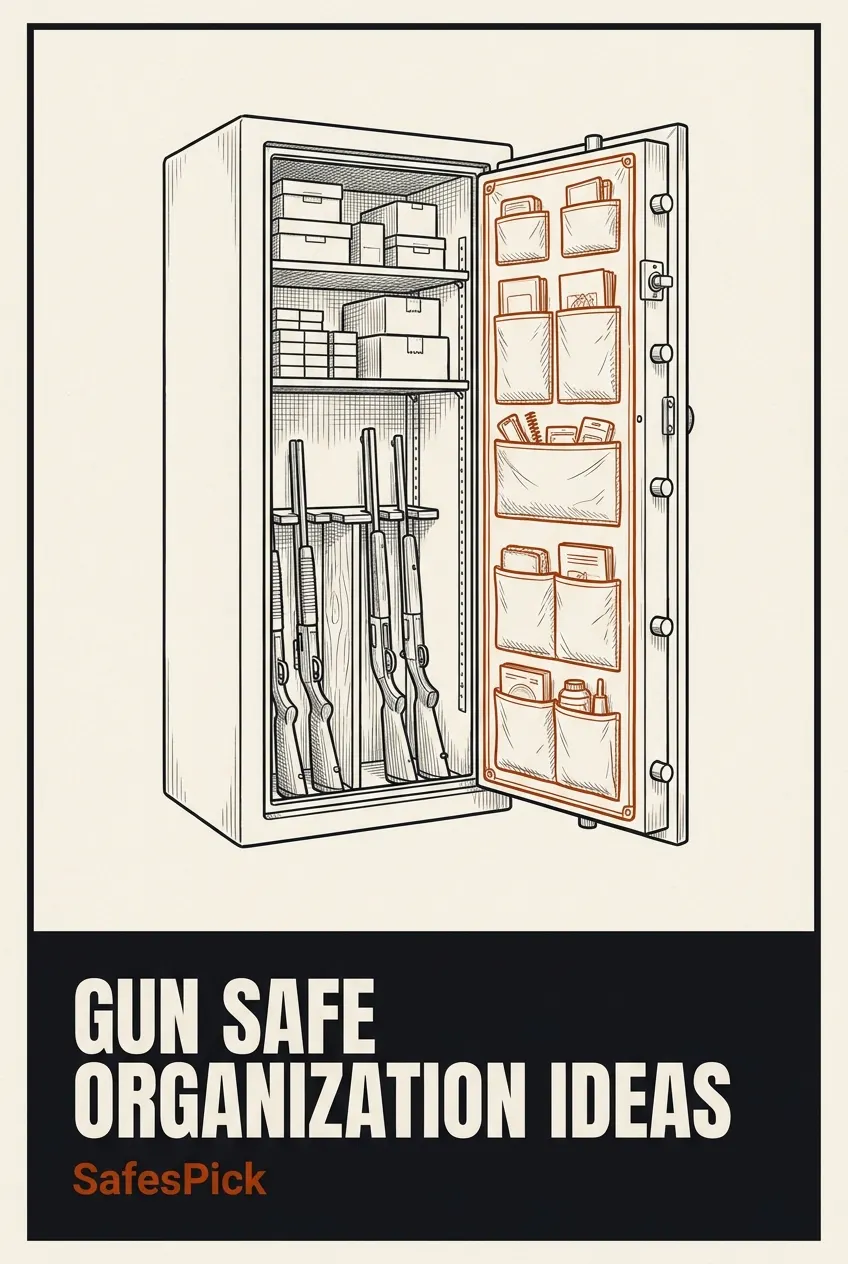
The inside of the door is the biggest unused surface in most gun safes. A door panel organizer turns it into pockets and holsters.
Liberty Safe's door panel page is a good illustration of what to check:
- Sizing is by safe. Liberty lists separate part numbers for its 12, 17–18, 20–25, 30–40, Fatboy Jr 48 and 50-size safes.
- Fit depends on the door. The panel is designed for fabric-covered door panels, and Liberty says older models "may have to be modified" to support it.
- Mounting: with included mounting brackets, per Liberty.
For other brands, the manufacturer's accessory page or the manual is the place to confirm fit. A door organizer that stops the door from closing fully isn't an organizer. It's a doorstop.
One practical point: a loaded holster on the door swings every time the door does. Store handguns on the door the same way as everywhere else — unloaded, per the DOJ handout.
Leave room for air and the humidity gear
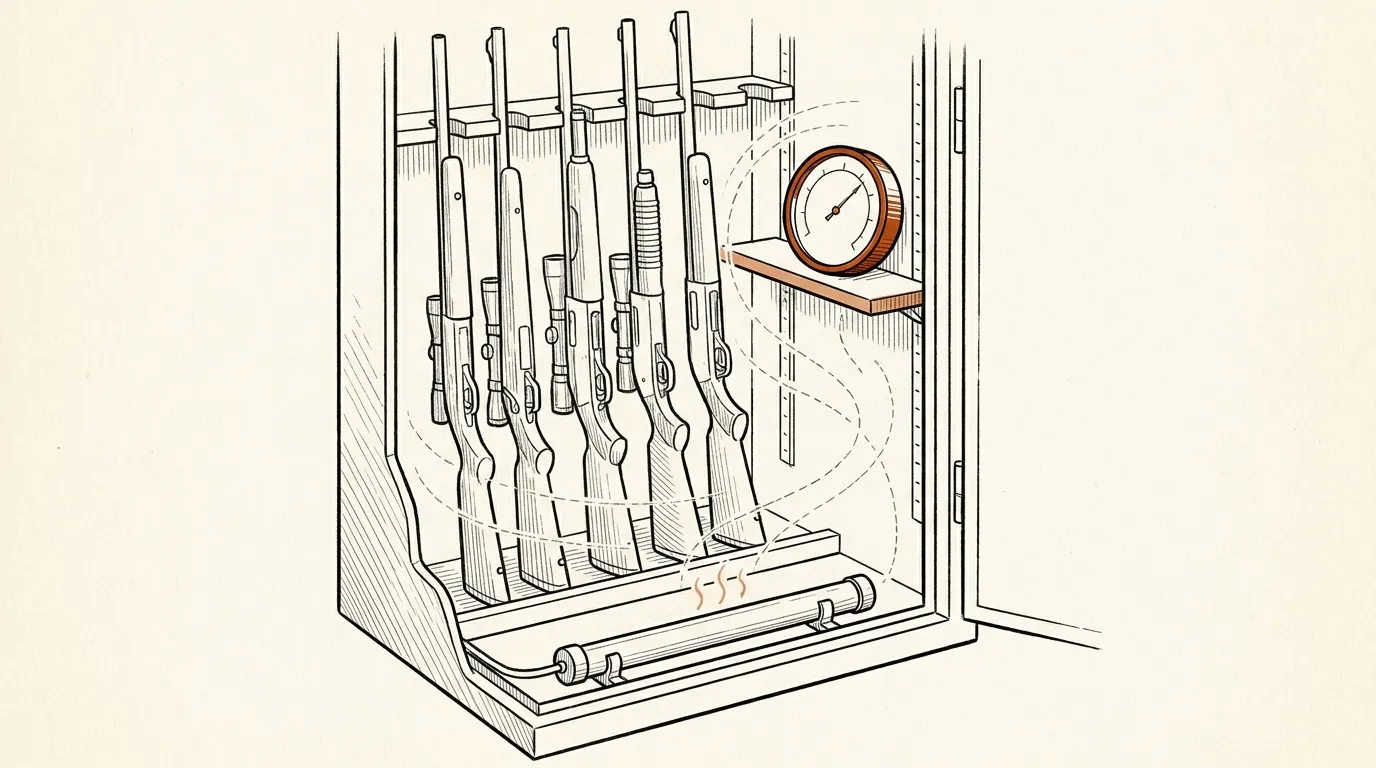
A packed safe is a damp safe. Liberty Safe lists poor air circulation among the causes of moisture in a gun safe. Gaps between guns let air move, and they keep finishes from rubbing against each other.
Plan space for the humidity equipment before you fill the shelves:
- The dehumidifier rod. Liberty recommends mounting its rod horizontally at the bottom of the safe.
- Desiccant. Somewhere you can reach to check the indicator and swap it out.
- The hygrometer. Liberty's rust guide says to place it on a shelf where you can easily see it. If you have to move three rifles to read it, you won't.
For the target number, see our ideal gun safe humidity guide. For the equipment itself, the humidity control guide.
What to keep out of the gun safe, or away from the guns
Not everything belongs touching the steel. The National Park Service's guidance on caring for firearms is specific:
- Leather slings and scabbards. The NPS advises against storing guns with them, because leather can react with the metal. Store them separately.
- Metal buckles, snaps and swivels. The NPS notes they can scratch the firearm's surface.
- Dust. The NPS says dust absorbs moisture, attracts pests and abrades surfaces. A safe that's opened often collects it.
That means the holster drawer and the sling hook are better in a separate bin or on the opposite shelf. The guns get the barrel rests to themselves.
Gun vault ideas: the same rules, bigger room
A walk-in vault room follows the same principles, at a larger scale. Liberty Safe's humidity guidance cites a range for "your vault room or gun safe," which tells you the room is treated like the box: measured, controlled, kept steady.
In a vault room, the ideas above scale up:
- wall racks sorted by frequency of use
- a separate cabinet for leather and soft accessories
- a hygrometer at gun height, not just by the door
- a written inventory kept outside the room
The difference is ventilation. A small safe shares air with the room around it. A vault room may need its own humidity control, and that's a question for whoever builds it.
Here's the catch: organizers take space the gun count assumed was empty
Every pocket, rack and holster takes up some interior. That's the trade.
The Marketing Department likes two things on a gun safe listing: a big gun count and a photo of a full interior, with shelves, binders and a row of handguns. Check whether both describe the same layout. Liberty's own layouts make the point: an all-shelving layout holds no long guns at all.
Liberty's own sizing guide says the interior "tends to fill up more quickly than you might expect," and recommends buying the largest safe you can afford. Organizers don't change the cubic feet. They only decide who gets them.
So organize to fit what you own now, plus some growth. If the plan only works by removing the door pockets or leaving guns out, the answer isn't another organizer. It's a bigger safe.
Skip it if: when you don't need organizers
- Your safe has an adjustable interior you haven't tried. Reconfigure it first. It's free.
- Everything fits with space between guns. Add a hygrometer, label a shelf, and stop.
- The organizer you're eyeing needs drilling or modification that your safe's manual doesn't cover. Check the manual and the warranty first.
- You're organizing around a safe that's too small. See our large gun safes page instead of buying another pocket.
Empty the safe this weekend. Write the inventory, measure the widest gun, and move the leather out of the barrel rests. Put the hygrometer where you can see it. Then, if something still doesn't fit, you'll know exactly how much room to look for.
Save this guide for later
Questions people ask about gun safe organization ideas
How do you organize a gun safe?
Start with an inventory and a tape measure, then choose a layout: long guns in the barrel rests, handguns on shelves or a door panel, documents and small valuables on upper shelves, and room left for a hygrometer and air circulation. Keep leather slings and holsters out of contact with gun metal.
What can I put on the door of a gun safe?
A door panel organizer adds pockets and holsters to the inside of the door. Liberty Safe sells door panels sized by safe and says older models may need to be modified to fit, so check the fit for your safe before buying.
Can you change the interior layout of a gun safe?
On many models, yes. Liberty Safe describes interiors that switch between two, three, four or six layouts, and a Pro Flex system with shelves that hook into the back wall at variable heights. Your safe's manual says which system it has.
Should I store leather holsters and slings in a gun safe?
The National Park Service advises against storing firearms with leather slings or in leather scabbards, because the leather can react with the metal. Store leather accessories separately or keep them out of contact with the guns.
Sources
- Liberty Safe Interiors Unlocked: Exploring Pro Flex and Flex Storage Solutions | Liberty Safe — accessed 2026-10-12
- Gun Safe Door Organizer | Liberty Safe — accessed 2026-10-12
- What Size Gun Safe Do I Need? | Liberty Safe — accessed 2026-10-12
- How to Keep Moisture Out of Your Gun Safe | Liberty Safe — accessed 2026-10-12
- Protect Your Investment: A Complete Guide to Preventing Firearm Rust and Humidity Damage | Liberty Safe — accessed 2026-10-12
- Dehumidifier Rod | Liberty Safe — accessed 2026-10-12
- Conserve O Gram 10/1: Caring for Historic Longarms: Storage and Handling Requirements | National Park Service — accessed 2026-10-12
- Safe Storage of Firearms: Unload it, Lock it, Store it | U.S. Attorney's Office, District of Vermont — accessed 2026-10-12
- Home Burglary Prevention Tips | City of Lewisburg, TN — accessed 2026-10-12