Modular Gun Safes: Assembled in the Room, Judged by the Same Rules
A modular gun safe ships in pieces, such as panels, a door and a frame, and is assembled with hand tools in the room where it will stand. It exists for basements, upper floors and narrow stairs that a one-piece safe can't reach. The weight hasn't gone anywhere. It's just arriving in instalments.
Compare models
In this tableGun safes and cabinets that ship in panels and are assembled on site. Values we could not confirm show as "—".
We earn a commission if you buy through our links, at no cost to you. Disclosure
No live products match this page yet. The table fills in automatically when listings that fit the rule are available on Amazon US.
A modular gun safe is built where it stands
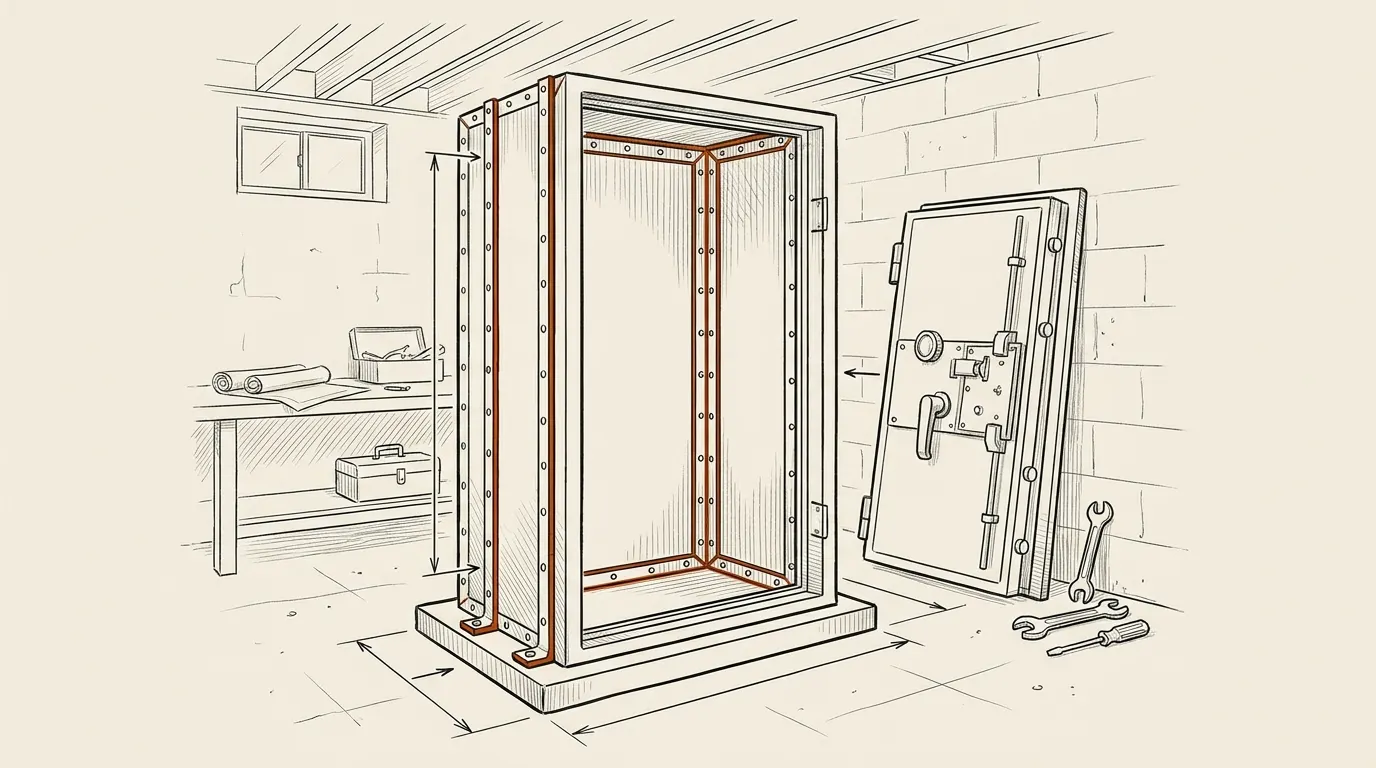
A modular gun safe arrives as a kit. The body comes as separate panels, the door comes on its own, and the parts are bolted together in place. One retailer's explainer describes a modular safe as one that "comes from the manufacturer in separate components," which makes it easier to transport and install.
Our table lists gun safes and gun cabinets that ship in panels and are assembled on site. The finished product looks and works like any other gun safe. The difference is the journey: no single piece weighs what the finished safe weighs, so it can go places a one-piece safe can't.
For the full range of gun safes, see our gun safes page. If you're comparing against lighter steel cabinets, which often ship flat too, see gun cabinets.
Who a modular gun safe suits, and who should skip it
A gun safe modular design solves a delivery problem. If delivery isn't your problem, it may not be the right trade.
Good fits:
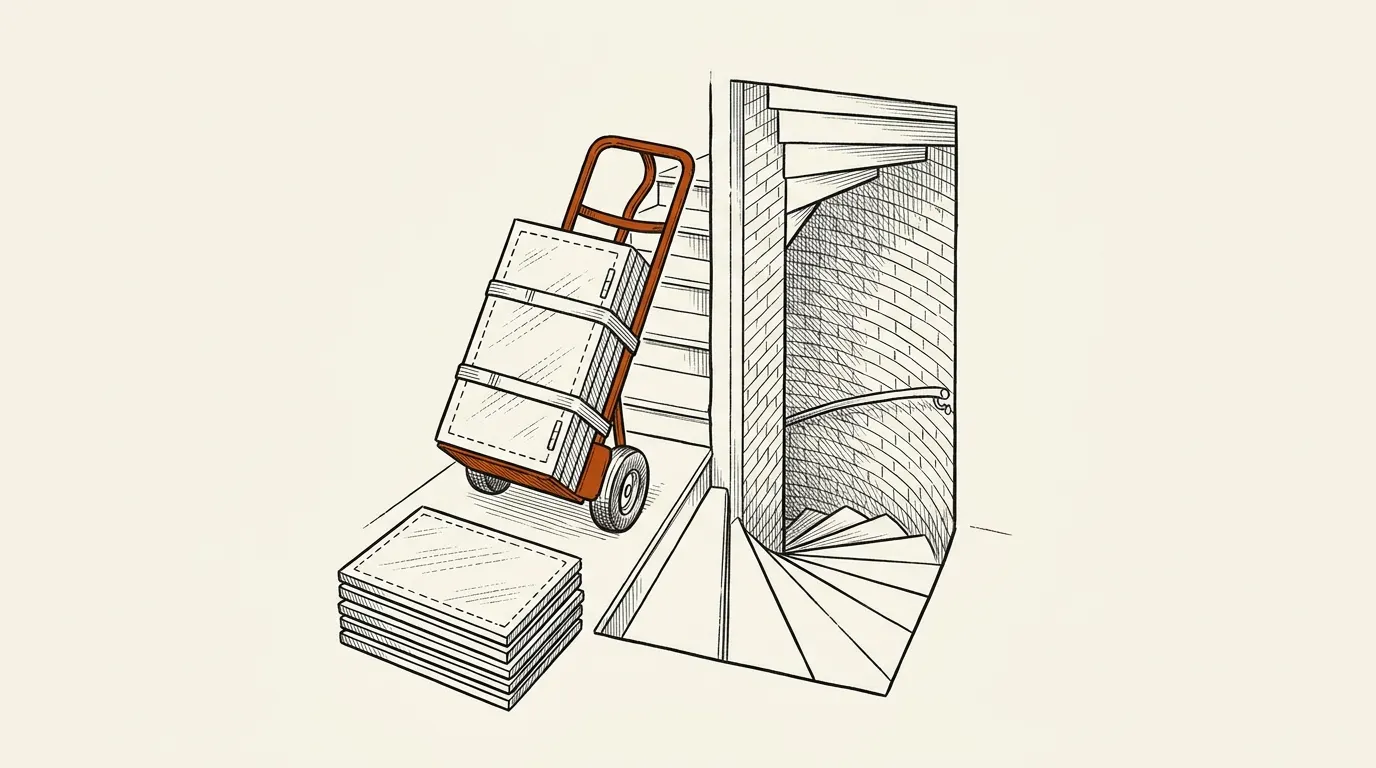
- A basement with narrow or turning stairs, where a one-piece safe can't make the corner
- An upper floor, where carrying a one-piece safe up the stairs is a crew-and-equipment job
- An apartment or condo with an elevator, a narrow hallway or a weight limit on the stairs
- Someone who expects to move house, if the safe is designed to be taken apart again
- A tight room where the safe has to be built in place
Skip it if:
- A one-piece safe can be delivered to your spot. You'll skip the assembly, and you'll have more models to choose from.
- You don't want to assemble anything heavy. The panels are lighter than the safe, but they aren't light. Check the manual for the number of people it calls for.
- You need a specific rating and the modular models you're looking at don't state one. See below.
What to look for in a modular gun safe: the joints, the rating and the paperwork
A modular safe is judged by the same standards as any gun safe, plus one extra question: how are the pieces held together? Every safe has seams. A modular one just has more of them, and they're the ones the brochure photographs from the far side of the room.
How the panels join
- Where the fasteners are. Bolts and screws that hold the panels together should be reachable only from inside the safe, with the door closed and locked.
- What the joints are. Interlocking edges, overlapping panels and internal brackets all exist. The listing or manual should show how it's built.
- What the instructions require. Torque values, the order of assembly and any final checks. A modular safe assembled wrong isn't the safe that was designed.
Burglary rating on the assembled safe
UL 1037 covers Residential Security Containers, and UL Solutions lists it as the standard gun safes are evaluated to. A Level I RSC must resist a 5-minute attack by one person using common hand tools and a small electric drill, without the door opening or a 4-inch opening being made in any surface.
The useful question for a modular safe is whether the rating, if there is one, covers the safe as you'll assemble it. A UL-listed lock is not the same thing: UL 768 and UL 2058 rate the lock alone, not the container around it. If a listing mentions UL, find out which standard it names.
California's Department of Justice has its own gun safe standard for California purposes, with specific requirements for steel, bolts, the lock and hinge protection, or an RSC listing from a Nationally Recognized Testing Laboratory. If California rules apply to you, read the official page.
Steel thickness
Steel gauge runs backwards: lower is thicker. Under the federal U.S. Standard Gauge, 10 gauge is 0.1406 in, 12 gauge is 0.1094 in and 14 gauge is 0.0781 in. Check the gauge of the panels and the door separately, since they can differ.
Fire claims
Some modular safes claim fire protection. A fire rating has three parts: the time, the temperature or UL 72 class, and who tested it. UL 72 Class 350 ratings are intended to protect paper records. A claim missing the lab is a manufacturer claim. Our guide on gun safe testing explains how in-house and independent tests compare.
Lock and backup
Electronic or mechanical, the lock needs a backup and a battery you can replace. That doesn't change because the safe came in a box.
Delivery, assembly and the anchor
The route. Cannon Safe says to measure doorways, hallways, staircases and turns along the delivery path. For a modular safe, measure against the largest single piece, which may be the door, not the assembled safe.
Assembly. Clear the space, unpack every piece, and check the parts list before you start. Follow the order in the manual. If the manual calls for two people, use two.
The anchor. A modular safe still needs to be bolted down. Assembled weight is spread across the same floor as any safe of the same size. Our guide on bolting a safe to the floor covers concrete and wood floors.
Moving later. If you plan to move the safe again, read the disassembly section of the manual now. Our guide on how to move a gun safe covers the one-piece alternative.
Modular vs one-piece gun safe: the trade, in plain terms
Both can be good safes. They differ in where the effort goes.
- Delivery. Modular wins. Each piece is lighter and smaller than the finished safe.
- Installation. One-piece wins. It arrives built; a modular safe has to be assembled correctly by whoever is there.
- Choice. One-piece wins. Far more gun safes are sold fully assembled, so there are more sizes, ratings and lock options to choose from.
- Moving house. Modular can win, if the manual allows disassembly. A one-piece safe needs movers and equipment every time.
- Ratings. Neither format wins by default. Read what the specific safe states, and check it applies to the assembled product.
If your route allows a one-piece safe, compare both. If it doesn't, the modular safe is the realistic way to get a full-size gun safe into that room. Our large gun safes page shows what full size means in practice.
How to read the modular gun safe table
The table lists every gun safe and cabinet we track that the manufacturer says ships in panels for assembly on site. A dash means the value isn't confirmed by the manufacturer or the listing.
There's no "best modular gun safe" in the abstract; there's the one that fits your route and your collection. To narrow it:
- Interior size. Check interior height and depth against your longest and widest gun.
- Burglary rating. Note whether a UL RSC rating is stated for the safe, not just the lock.
- Steel gauge, for both the body panels and the door.
- Fire rating, with the lab named, if fire matters to you.
- Assembled weight, checked against your floor.
We don't publish star ratings or our own modular gun safe reviews. The specs in the table come from manufacturer pages and listings, and each row links to the listing with its customer reviews.
Measure the stairs, read the manual, then bolt it down
Measure the narrowest point on the route against the largest piece. Read the assembly instructions before you buy, not after. Then check the rating covers the safe as assembled, build it where it will stay, and bolt it down before the first gun goes in.
Related pages
Questions people ask about gun safe modulars
What is a modular gun safe?
It is a gun safe or cabinet that arrives in separate components and is assembled where it will be used, usually with hand tools supplied by the manufacturer. Each piece is lighter than the finished safe, which makes delivery to basements and upper floors easier.
Are modular gun safes as secure as one-piece safes?
It depends on the specific product, not the format. Check whether the assembled safe carries a burglary rating such as UL 1037 Residential Security Container, what the steel thickness is, and whether the panel fasteners are reachable only from inside. If the listing does not say, ask the manufacturer in writing.
Can a modular gun safe be fire-rated?
Some modular safes claim fire protection. As with any safe, a fire rating should state the time, the temperature or UL 72 class, and who tested it. A claim without a named lab is a manufacturer claim.
Can you take a modular gun safe apart to move it?
Many are designed to be disassembled and reassembled, which is one reason people choose them. Check the manual for the disassembly procedure and whether moving the safe affects the warranty.
Where can I read modular gun safe reviews?
We do not publish our own reviews or star ratings. Our table shows specifications from manufacturer pages and listings, and the Amazon listing linked from each row shows customer reviews for that product.
Sources
- Understanding Modular Gun Safes | Safe and Vault Store (retailer) — accessed 2026-10-12
- UL 1037 Antitheft Alarms and Devices | UL Standards & Engagement — accessed 2026-10-12
- Intertek requirement-change notice: UL 1037 revision 9-9-2016, Section 54 Residential Security Containers — accessed 2026-10-12
- Anti-theft Device Testing and Certification | UL Solutions — accessed 2026-10-12
- UL 72 Tests for Fire Resistance of Record Protection Equipment | UL Standards & Engagement — accessed 2026-10-12
- UL 768 Combination Locks | UL Standards & Engagement — accessed 2026-10-12
- Gun Safe Standards | California Department of Justice — accessed 2026-10-12
- 15 U.S. Code § 206 - Standard gauge for sheet and plate iron and steel | Cornell LII — accessed 2026-10-12
- How to Buy a Gun Safe | Cannon Safe — accessed 2026-10-12