How to Move a Safe, Sorted by How Much It Weighs
Moving a safe is the rare household job where the instructions change completely with the number on the scale. A 13-pound fire chest goes under your arm. A 500-pound safe needs a plan. A one-ton safe needs someone else's plan. Safes are built to be hard to carry off. They make no exception for the owner.
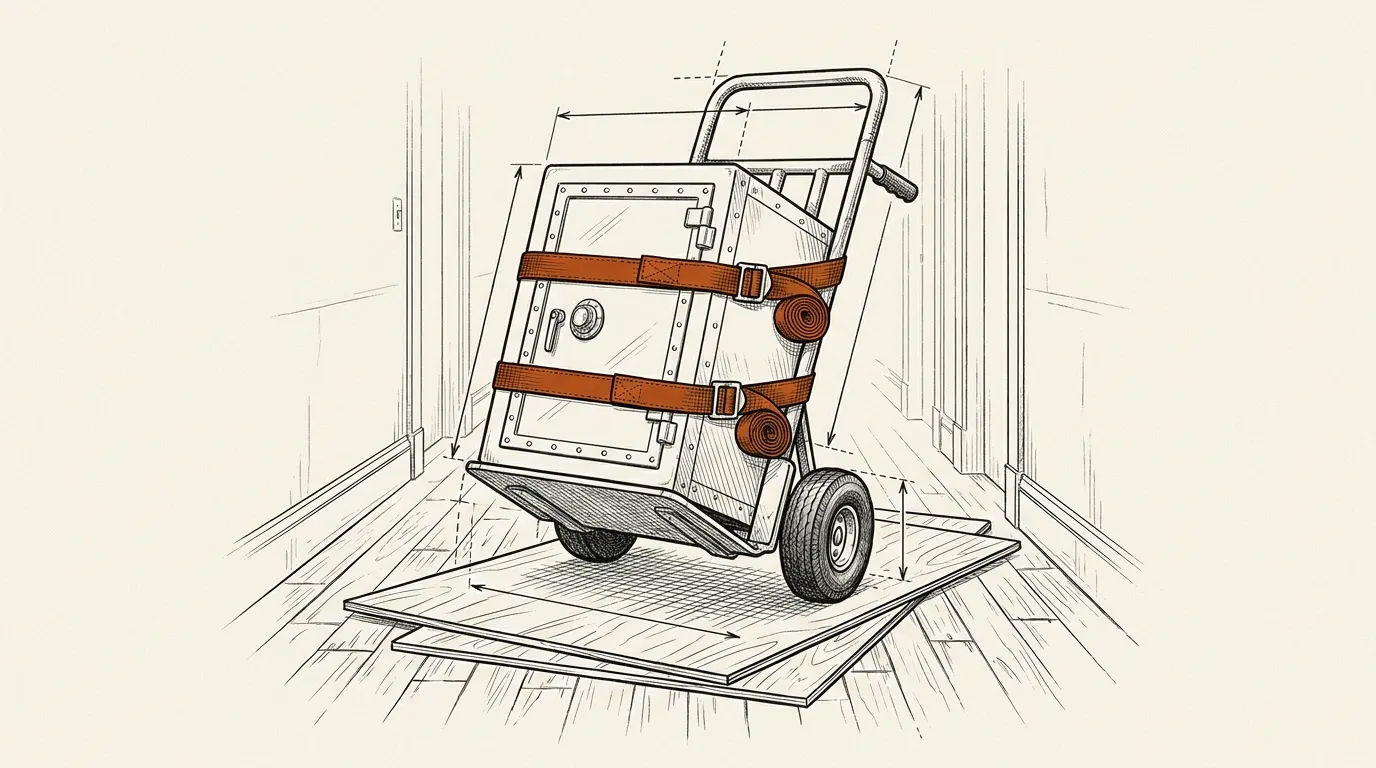
Short answer: How to move a safe depends on its empty weight. A small fire chest or a sub-100-pound home safe can be carried or wheeled by two careful people. From a few hundred pounds up, you need an appliance dolly rated well beyond the weight, straps, floor protection and helpers. Past 500 pounds, or with stairs in the way, Liberty Safe "strongly" recommends professionals. At 1,000 pounds and beyond, every manufacturer we read points to a safe mover or dealer.
This page covers safes of every kind: fire chests, home security safes, office safes, and the big ones. If yours is a tall gun safe, our guide on how to move a gun safe goes deeper on stairs, trucks and laying it down. If you're replacing the safe rather than moving it, the home safes overview is the place to start.
Step one: find the empty weight before you touch it
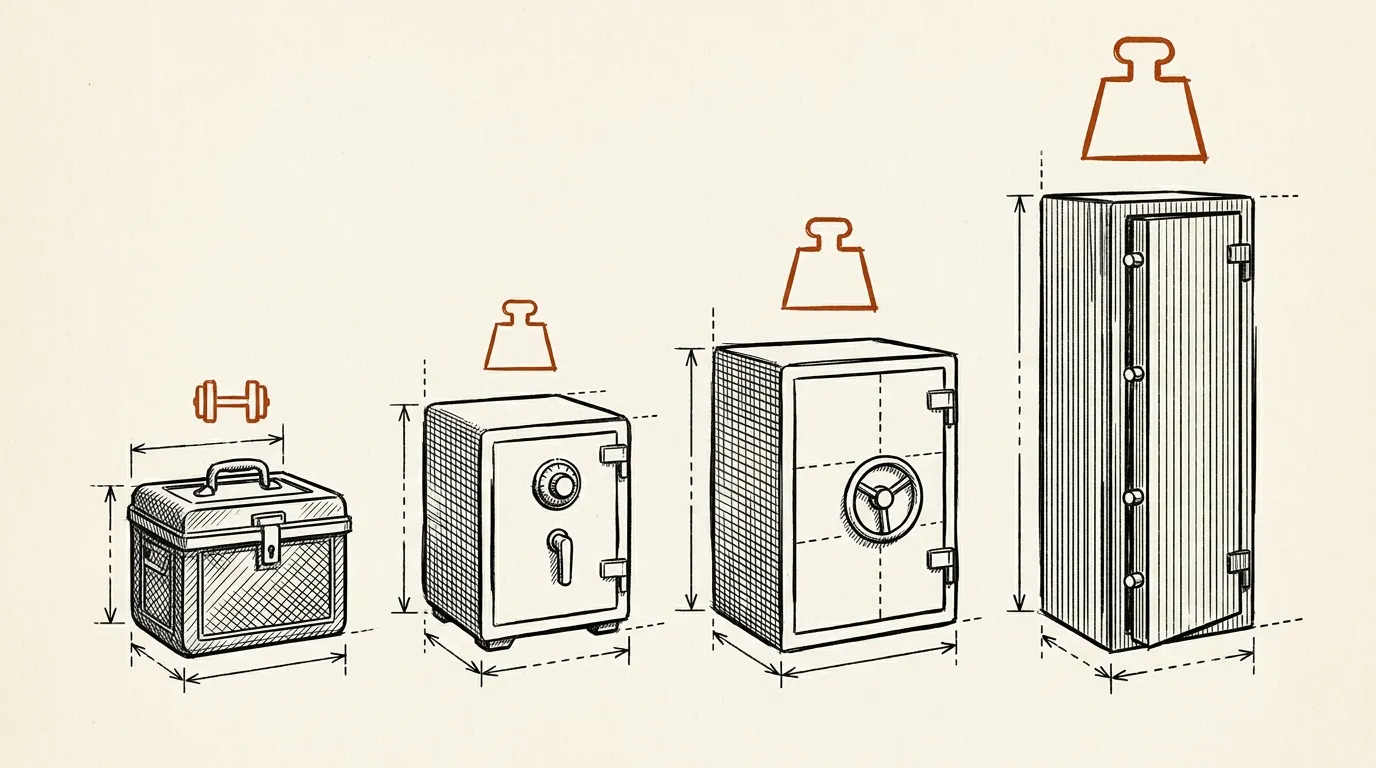
Every decision below hangs on one number, so get the real one. It's on the manufacturer's spec page or in the manual. Some examples from manufacturer spec pages, to show the spread:
- SentrySafe 1200 fire chest: 13.32 lb
- SentrySafe SFW123GDC fire and water safe (1.23 cu ft): 86.69 lb
- SentrySafe EF4738E (4.71 cu ft): 217 lb
- Fort Knox gun safes: about 450 to 600 lb for entry models, past 4,500 lb at the top, per the Fort Knox FAQ
Liberty Safe's relocation guide puts the average home or gun safe at 200 to over 1,500 pounds, "with some models exceeding a ton." Our guide on how much a safe weighs has more examples by type.
Then empty it. Liberty calls emptying the safe a non-negotiable first step. The contents add weight and shift while you move, which is how safes tip.
Where to look next
How to move a small safe without a dolly
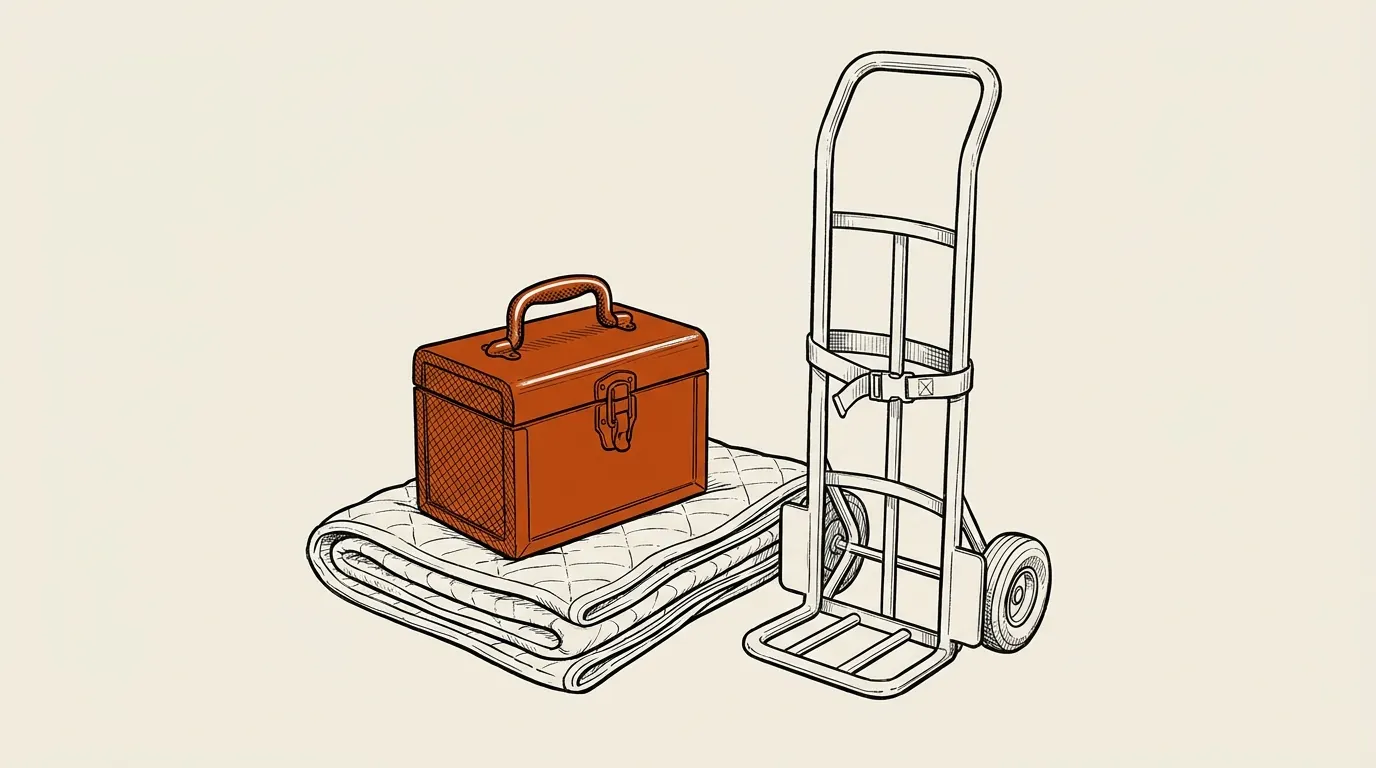
Small safes are the one case where carrying is normal. SentrySafe's 1200 is sold as a "Small Fire Chest with Carrying Handle," so for that kind of box the handle is the design.
That's not true of bigger safes. Stack-On's security safe manual says: "Do not move this safe using its handle. The handle should only be used for opening and closing the door of the safe." Liberty says never to use the handle, dial or hardware to lift or lever a safe. A door handle is attached to a lock mechanism. It was never meant to hold up the box.
For a safe in the 50 to 150 pound range:
- two people, lifting from the base
- the door closed and locked
- a hand truck with a strap for anything you can't carry comfortably
- a blanket underneath, so it doesn't slide in the car
(The phrase "portable safe" has been doing a lot of work in some listings. Check the weight before you agree with it.)
How to move a heavy safe: 300 to 1,000 pounds
This is where most home and gun safes sit, and where the manufacturer advice gets specific.
The dolly. Liberty's relocation guide: "Do not use a standard dolly." It calls for an appliance dolly rated well over 1,000 pounds, with straps. Liberty's moving FAQ says a high-capacity appliance dolly or furniture hand truck with straps.
The floor. Liberty says to lay plywood sheets, hardboard or thick moving blankets to spread the weight, and not to drag the safe. Browning's manual lists tile and other floors that could be damaged as a planning point, along with doorways, furniture, stairs and corners.
The people. Liberty's do-it-yourself page asks for at least three strong helpers and says never move a safe alone.
The route. Measure doorways, hallways, staircases and tight corners. Liberty suggests including handle depth.
The pallet. If the safe is new and still on its shipping pallet, SentrySafe's gun and executive safe manual calls pallet removal "a two-person operation," says the safe should stand upright on a flat, level surface, and says to close the door and lock the handle before tipping it off.
Thick carpet makes everything harder. A dealer's guide on transporting heavy safes notes that rolling a safe on pipes works poorly on thick carpet. Sheets of hardboard give the wheels a firm surface.
How to move a 500 lb gun safe or any safe that size up stairs
Five hundred pounds is the line Liberty Safe draws. Its moving FAQ: "For safes over 500 pounds or complex moves (like stairs or tight spaces), hiring professionals is strongly recommended."
If you're doing a lighter safe yourself:
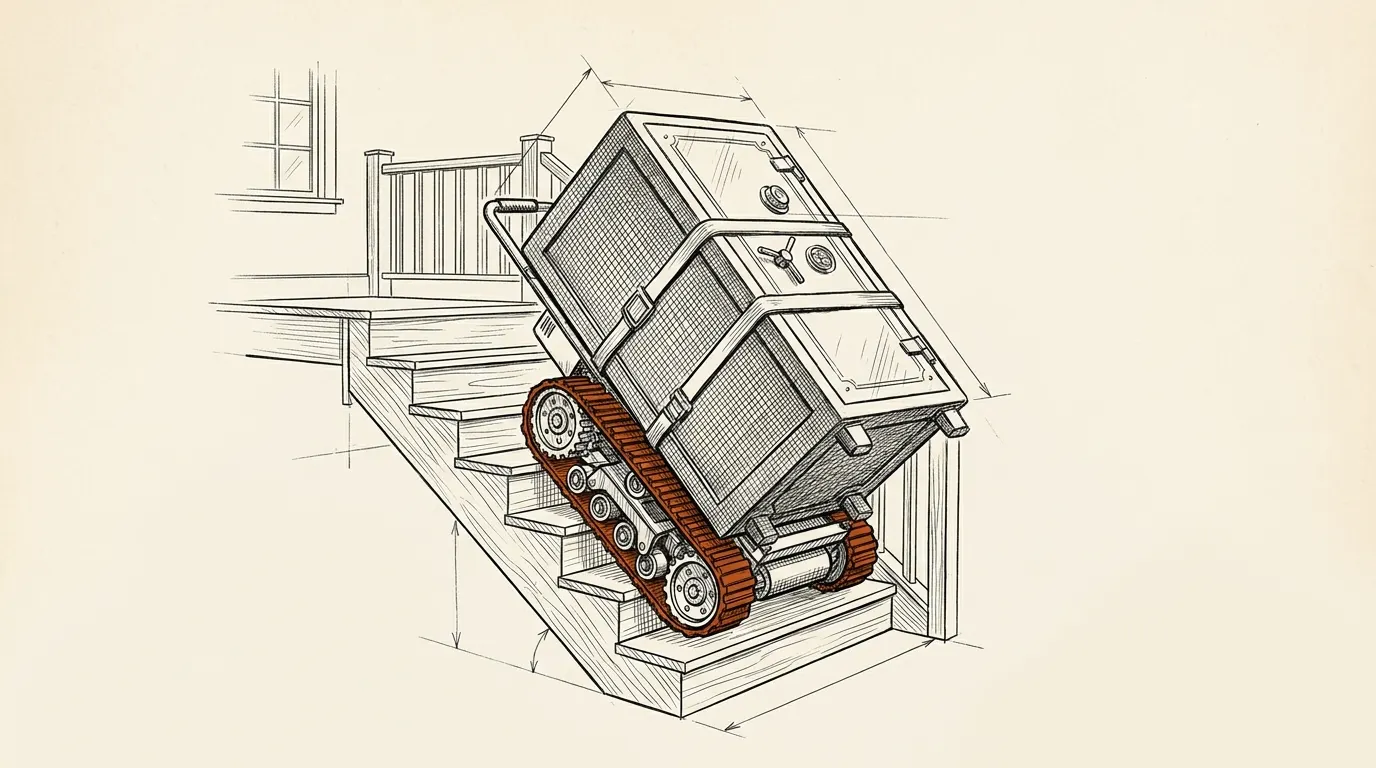
- Use a stair-climbing dolly. Liberty: "Never attempt to move a heavy safe on stairs with a standard dolly." Its stairs guide recommends an electric stair-climbing dolly, load-rated for the safe.
- Check the stairs. Liberty says to confirm the staircase is sturdy enough for the weight.
- Leave an exit. "Don't be a hero; if the safe slips, jump out of the way and let it fall," says Liberty's stairs guide. A safe dealer's guide says the same: everyone needs a clear place to jump to should the safe topple.
The stairs don't care how many times you've done this. Neither does the safe.
How to move a 1,000 lb gun safe, a 2,000 pound safe or a 1-ton safe
Here the advice stops being a list of tips and becomes a referral.
- Fort Knox: "For large safes and vault doors, professional delivery and installation through your dealer is strongly recommended."
- Browning: "We strongly recommend using a professional mover to move your safe." The manual warns that failing to follow this could result in serious injury or death.
- Liberty Safe: "Liberty Safe consistently recommends hiring professional, insured safe movers." It also points to authorized independent safe movers, which you can find by filtering its dealer locator for "Safe Mover."
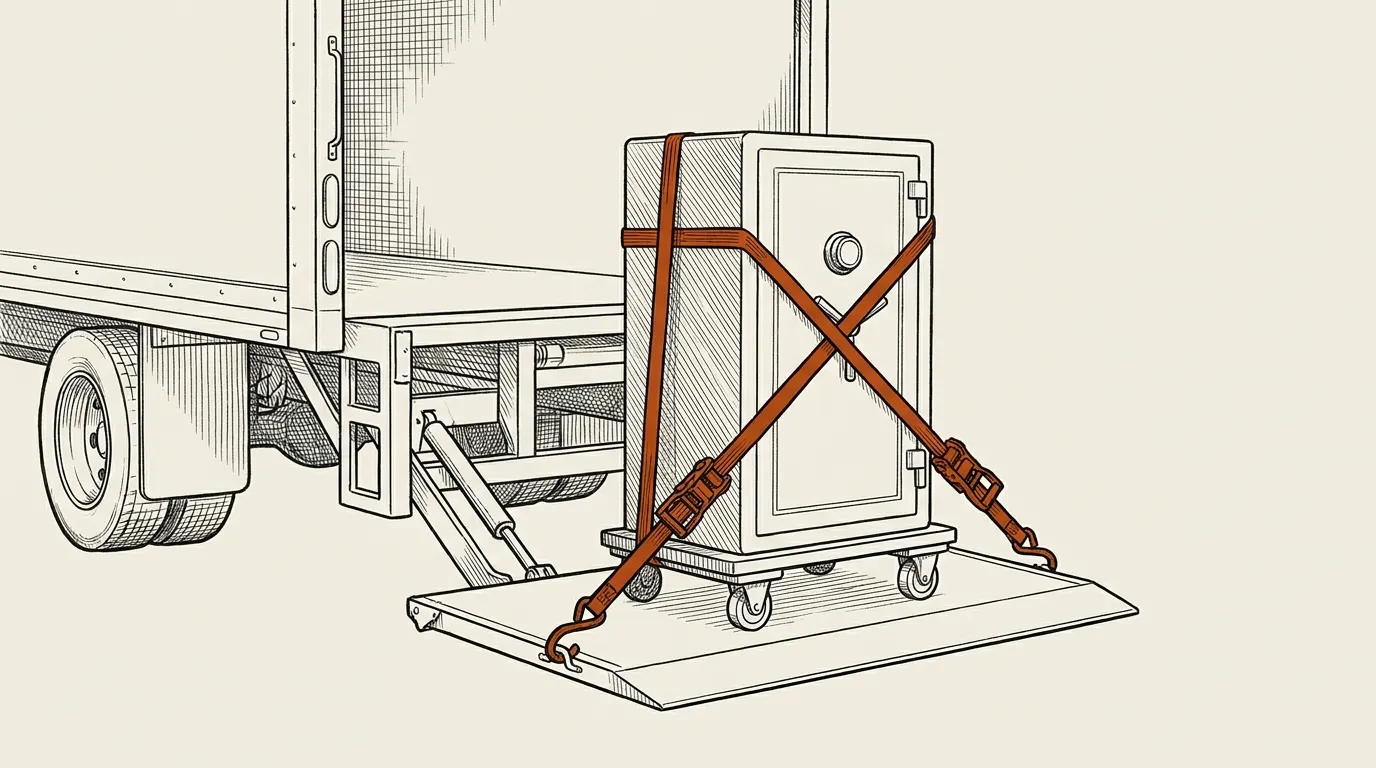
The equipment is different at this weight. Liberty's relocation guide calls a moving truck with a reinforced floor and a hydraulic lift gate the safest option for loading and unloading, and says heavy-duty ratchet straps should hold the safe to the dolly and inside the vehicle. A standard pickup may not be enough, and Liberty notes tailgates can be damaged by overloading.
Picture a one-ton safe on a pickup's tailgate. Now picture explaining it to your insurance company. That's a short conversation.
Moving a safe in a vehicle
Whatever the size, the same rules from Liberty apply:
- keep the safe upright whenever possible
- lock the door for the move
- strap it to the dolly and to the vehicle with ratchet straps
- never rely on the safe's weight to hold it in place
A small chest can ride on the floor of a car, wedged so it can't slide. A bigger safe needs a rated trailer or a lift-gate truck.
Here's the catch: "two strong friends" is not a weight rating
Every do-it-yourself plan includes friends. Liberty's own do-it-yourself page asks for three of them, and still says it "doesn't recommend that you move a safe on your own." The page offers tips because people will try anyway.
The catch is that the costs of a bad move land in different places. The safe may survive a drop; the floor, the stairs, or a foot may not. Professional safe movers bring the dolly, the lift gate, the experience and the insurance. Liberty says the moderate cost "is well worth it." The math usually agrees once you price a new staircase.
Skip it if: when you don't need a safe mover
- The safe weighs under about 100 pounds. Two people, a hand truck and some care will do. Use the base, not the handle.
- You're only sliding it a few feet on concrete. Empty it, protect the floor, use a dolly. Still never alone.
- It's bolted down and you're not sure how. Remove the anchors first; our bolting guide covers what holds a safe down.
- It's a gun safe over 500 pounds or on another floor. See the gun safe moving guide, then call a mover.
That's the method. Look up the empty weight, empty the safe, and let the number decide whether you need a hand truck or a safe mover. Once it's in its new spot, re-level it and bolt it down so the next person who wants to move it finds it as hard as you did.
Save this guide for later
Questions people ask about how to move a safes
How do you move a heavy safe?
Empty it, find its empty weight, measure the route, and use an appliance dolly rated well beyond that weight, with straps. Liberty Safe says that for safes over 500 pounds or moves involving stairs or tight spaces, hiring professionals is strongly recommended.
How do you move a safe up stairs?
Liberty Safe says never to move a heavy safe on stairs with a standard dolly. It suggests a load-rated stair-climbing dolly, at least two helpers, and, as the best option, a professional safe mover. Confirm the stairs can carry the weight first.
How do you move a 1,000 lb gun safe?
Manufacturers point to professionals. Liberty Safe recommends professional, insured safe movers and says a truck with a hydraulic lift gate is the safest way to load and unload; Fort Knox strongly recommends professional delivery and installation through a dealer for large safes.
Can I move a safe by its handle?
No. Stack-On's manual says not to move its safe using the handle, which is only for opening and closing the door, and Liberty Safe says never to use the handle, dial or hardware to lift or lever a safe.
Sources
- Safe Relocation 101: Tips for Moving Your Liberty Safe Safely | Liberty Safe — accessed 2026-10-12
- Can I Move My Safe? | Liberty Safe — accessed 2026-10-12
- Tips for Moving a Gun Safe on Your Own | Liberty Safe — accessed 2026-10-12
- How to Get a Safe Upstairs | Liberty Safe — accessed 2026-10-12
- FAQ's | Fort Knox — accessed 2026-10-12
- SentrySafe Owner's Manual: Gun and Executive Safes (401147) — accessed 2026-10-12
- Stack-On Security Safes Combination Lock User Manual — accessed 2026-10-12
- Small Fire Chest with Carrying Handle (Model 1200) | SentrySafe Store — accessed 2026-10-12
- Large Steel Fireproof Waterproof Safe with Digital Keypad (SFW123GDC) | SentrySafe Store — accessed 2026-10-12
- Extra Large Waterproof and Fireproof Safe with Digital Keypad (EF4738E) | SentrySafe Store — accessed 2026-10-12
- Browning Safes Owner's Manual (ProSteel Security Products) — accessed 2026-10-12
- Transporting a Heavy Safe | Safe and Vault Store — accessed 2026-10-12